
Can I write about cultures other than my own? What changes to the historical record might be permissible in historical fiction? asks Gareth Williams.
I read Apple Gidley’s excellent blog ‘Taking Liberties’ with great interest and empathy. She raises profound questions that confront all historical novelists eager to stray beyond their own back doors. Can I write about cultures other than my own? Of course. But is it foolhardy to risk it in the cancel culture climate of recent years? I applaud her reference to Toni Morrison. The book I wanted to read hasn’t been written, so I am daring to write it. The central character died more than two hundred years ago. He had British parents like me, but he was born on the other side of the Atlantic. He was a supporter of the King living amidst those who would shake off the shackles of an absentee monarch and his tax regime.
I think this brings me closer to the point. As LP Hartley wrote back in the 1950s ‘The past is a foreign country: they do things differently there’. To write about the past IS to write about another country. A country with different attitudes and customs. Whatever care we exercise in conjuring that past into the present, trapping it onto the pages we write, is analogous to the respect with which we venture into research of any setting – cultural or otherwise.
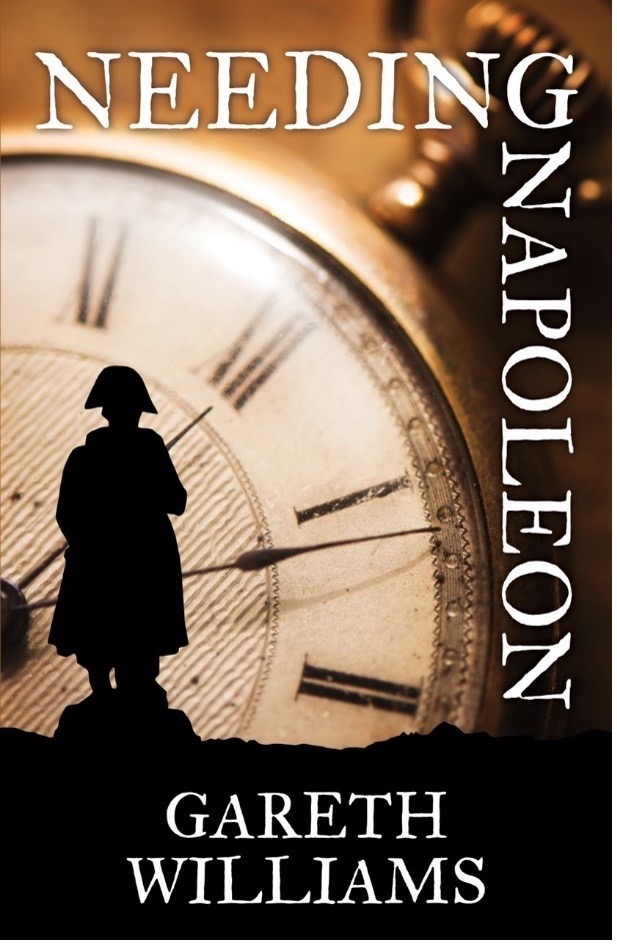
If I dare contemplate how Napoleon felt on the evening of his final defeat at Waterloo, as I do in my novel Needing Napoleon, why should I not consider the complex collision of cultures that took place when a runaway officer from the British army married into the family of a Native American leader? What fertile ground. From being elected to lead a Creek embassy to meet the Prince Regent and Prime Minister Pitt, to declaring war on Spain, escaping captivity by squeezing through a gunport and swimming away, to his eventual demise through hunger-strike in a Cuban fortress, his life is an irresistible story for an historical novelist. I could not resist.
But as I wrote draft after draft, I was bombarded by well-meaning warnings. Have you commissioned a sensitivity edit? Are you sure there is a publisher brave enough to take on such a story? It was dispiriting, but my main character’s adventurous life just would not let go. His was a story I had to tell even if it was unfashionable. He was much more than an apologist for British imperialism: he was a willing tool, a weapon eager to be wielded and frustrated he was not used more.
We all live constrained by the standards of our time. My character was perhaps on the wrong side of history but he was also trying with every fibre of his being to carve out a place for himself as everything around him changed with bewildering rapidity. And here we are at the very heart of things. Is that not a theme that most of us today would recognise as relevant? If, as readers, we fail to recognise the humanity in figures who propound different beliefs, then we are the poorer for it. It is the job of the novelist to ensure this does not happen.
I do not know if I will find a publisher willing to take a risk on my book. I am fairly sure my treatment of the subject will not please everyone. There is no harm in that. There is no shame in that. There is no offence intended. I hope none is taken. I have introduced counterpoints to the main narrative, which offer different interpretations of the figures at the heart of my story. But I have also left room for the reader. I did not want to write a book that told the reader how to think about this very real and flawed man who was dead at forty-two. However, I did want to shine a light on a life almost lost to the past, a luminous tale of another age that resonated with me across the centuries, ever since I first saw a portrait in a Northamptonshire stately home decades ago.
Still inspired by Apple’s blog, I now want to think a little about what changes to the historical record might be permissible in historical fiction? In my Richard Davey books, I drop a disgruntled modern-day schoolteacher into the aftermath of Waterloo. He thinks he can change the past but major events prove intractable. I do, however, enjoy a ‘what if’ proposition and indulge myself in the latter stages of Needing Napoleon and its sequels. In Serving Shaka, I imagine Napoleon meeting and becoming an adviser to Shaka as he builds the Zulu empire. The dates work, and if Napoleon had escaped Saint Helena, then the southern African coast was the nearest landfall. In the third instalment, Rescuing Richard, I needed a foil for my main character so I shunted an expedition from the Cape into Natal forward three years. It could have happened then, so I made it so. Exploring how the world might have developed differently is both a source of entertainment and, as Niall Ferguson once suggested, ‘about making explicit the choices contemporaries confronted’.
With this in mind, when writing fiction, I do try to contain my imagination within what is plausible, without getting in the way of a good story. My fictional biography presented slightly different challenges. I wanted to tell my character’s story. I wanted to bring it to life. I wanted him to be with us in the pages of my book. So, I have kept to a strict chronology. As far as I can establish, if an event is in the book, it happened precisely when I said it did. Did it happen the way I describe it? Within reason – yes. But there are so many gaps in the record of his life. I have enjoyed filling them in and hope the reader finds them entertaining. Because, in the end, we should remember our self-imposed rules should not diminish the pleasure a good book can bestow.
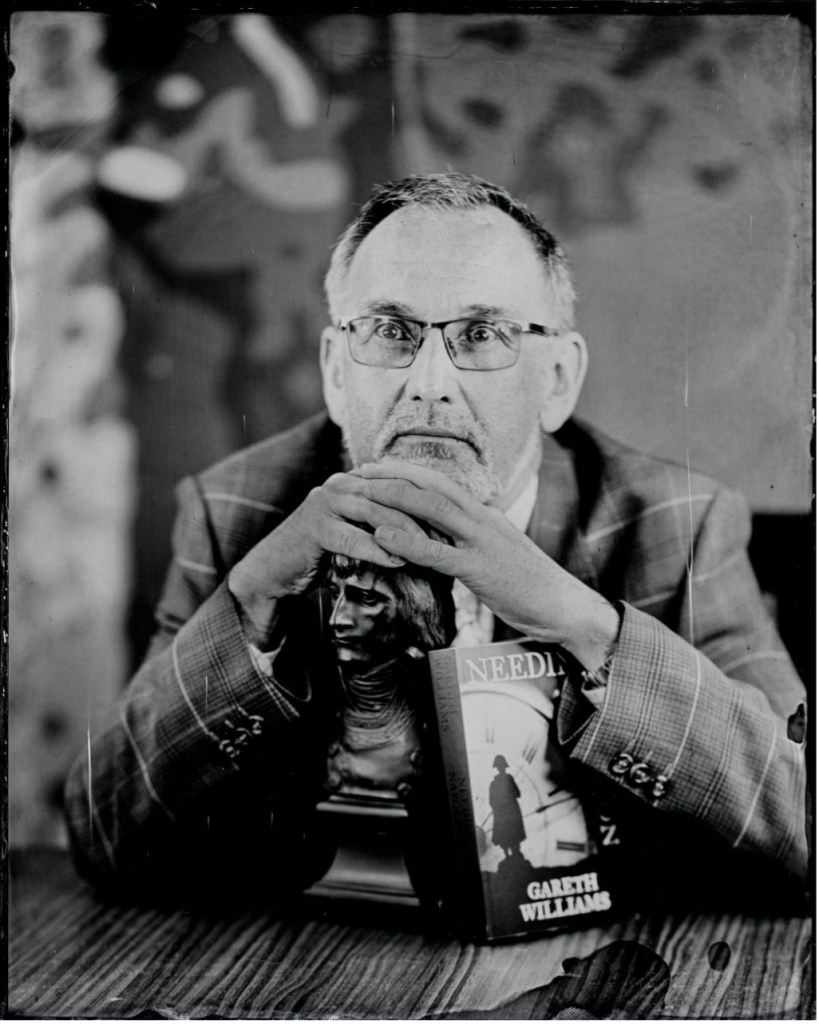
Gareth Williams was born in Essex but lived on three continents before he was a teenager. He now lives on the magical Isle of Skye with his wife (and editor) Helen and their seventh Pyrenean Mountain dog, a rescue called Sophie. He has climbed seventy percent of the Scottish mountains over 3,000 feet despite a fall that broke his back in three places. He is the author of The Richard Davey Chronicles, which feature a hapless teacher and Napoleon Bonaparte trying to change the course of history, and currently consist of three novels. He is close to completing both a triple-timeline ghost story set along Hadrian’s Wall and a fictional biography set amidst the birth pangs of the United States of America.
https://www.whatifalternatehistory.com
Amazon.co.uk: Gareth Williams: books, biography, latest update
 The Historical Novel Society UK 2024 conference
Leave a comment