
How do you know what the right balance is? asks Robin Henry.
In my work as a book coach and developmental editor, I have spent a lot of time with historical fiction manuscripts in addition to the time I spend reading them for fun. I am a part-time humanities instructor and librarian; therefore I love the research aspect of historical fiction. The first historical fiction I remember reading was in the second grade—The Door in the Wall by Marguerite de Angeli. Even as a second grader, I had good taste. The Door in the Wall was a Newberry winner. All this is to say, I love historical fiction. I love the feeling of being actually ‘in’ the past for a few hours, but just for a few hours.
When I work with writers of historical fiction, one of their most frequent struggles is how to balance the history with the fiction. Historical fiction is unique in that it strives to be as accurate as possible, while still being entertaining. It is true that science fiction is often based on real science, but it is generally used as a jumping-off point, not the whole world of the story, as is the case for historical fiction.
So how do you, as a writer, know what the balance is? There are three questions writers may want to consider as they toil away on their tomes:
- Are you writing a history book or a historical fiction novel?
- Why do readers choose historical fiction?
- Are you writing for an audience or for personal enjoyment?
Most likely, if you are reading this, you are writing historical fiction, so you want to tell a story that uses history as the setting. It is true that historical fiction readers generally enjoy interesting facts and research, and they want authenticity. However, writers should do their best to ensure that the details they include are integral to the story, not extra or fun (and really cool!) facts.
Readers will need to know how many forks were on that Gilded Age banquet table if the characters are attending the dinner, having a conversation while eating with the many and sundry forks, or setting the table. Those forks will be even more important if there is a plot point that hinges on the correct use or if Uncle Julius gets stabbed with the sardine fork. But if the dinner is not where the action is happening, then some details might be less important.
One way to test yourself is to see if you have an expository paragraph that could be cut from a scene without affecting the story. If you cut it and read it again or better yet, have someone else read it and no one misses it, then maybe it wasn’t necessary. If, however, you find that readers are confused about something or have a lot of questions, that paragraph, or a version of it, may be needed so that the reader understands what is happening and why.
It is a truth universally acknowledged by historical fiction writers that you will do more research and learn WAY more about your time period than will fit into your novel. Take comfort in saving the extra for another book, a short story, your blog, TikTok, or even a fabulously detailed author’s note.
Most historical fiction readers want an immersive experience from their novels. They want to feel like they are there, in the room where it happened. As a writer, it is your job to give them that feeling by using beautifully wrought descriptions of real places and calling things by their historic names and writing dialogue that gives the feeling of your era. The trick here is to use just enough detail and no more. If you go too far, you might end up in the dreaded land of the “infodump.”
The first time you write a scene, include everything. Then, just like a sculptor, cut away what is not necessary until you have the image you want. So, perhaps you describe just the hat a character is wearing, to create a vivid image that stands out, rather than giving the details of all the clothing, which will be difficult for the reader to parse. Give them a detail, or a few, that matter about the characters and settings to create a memorable image in their minds. They will see your story clearly because you have given them a sparkling diamond rather than a dump truck full of sand.
Many historical fiction authors have a deep personal interest in certain periods or people from the past. Others use family history to write novels. In these cases, there are likely to be only a few people who will share your personal stake in that particular story. To make family history or historic personages into a story that is novel worthy, it frequently requires the writer to take artistic license, to elide events, to build composite characters, to dramatize. It is important to consider whether you want to write a family history or a biography, or some other more factual account, rather than a novel. There is nothing wrong with writing for one’s own personal enjoyment and edification!
In historical fiction, as in all types of fiction, story comes first. Then, if the reader wants to know more about something in the story, they can go look it up in a history book.
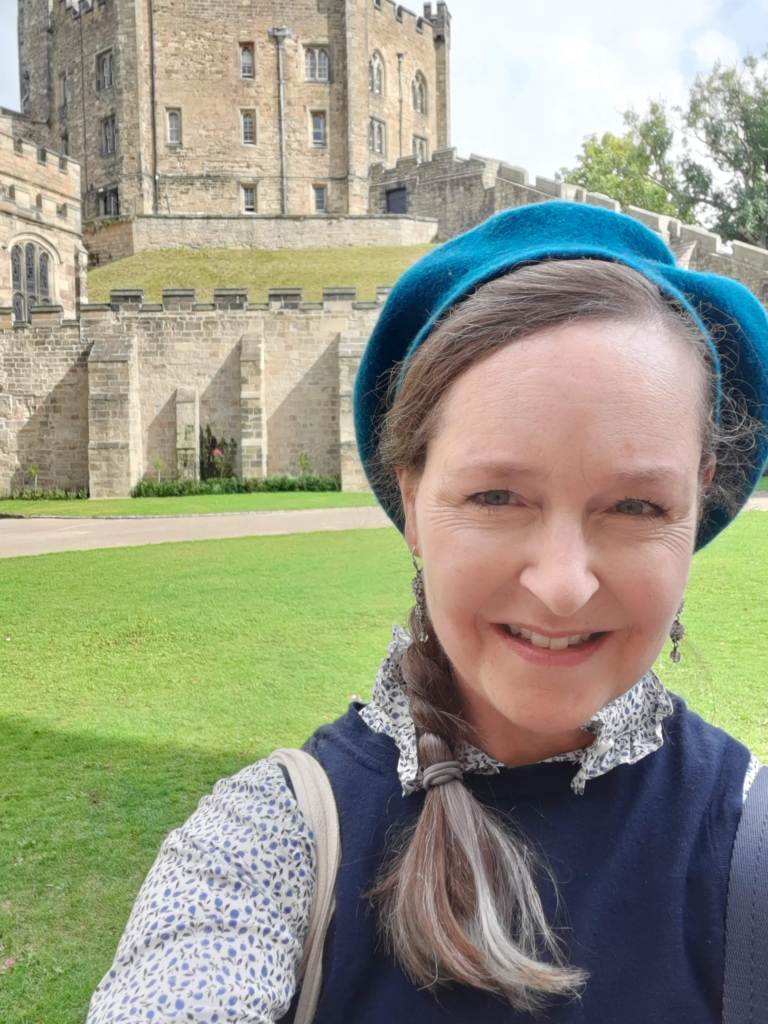
Robin Henry is an Author Accelerator Certified Book Coach and holds an MLS (Library Science) and MA in Humanities. She is a librarian, adjunct professor of humanities, developmental editor, and book coach who specializes in historical fiction, historical mysteries, and upmarket fiction. She has over 20 years of experience working with books and authors. She loves the Oxford comma and hot beverages of all types.
Robin is running a pre-conference online session on 31 May on ‘Using Your Reading to Level Up Your Writing’, drawing on a close reading of Amor Towles’ The Lincoln Highway. Pre-conference sessions are £15 each.
 The Historical Novel Society UK 2024 conference
Leave a comment