
By Alix Christie
When I got the call that summer day in 2015 inviting me to visit McDonald Ranch, I let out a whoop at the wheel of my rental car. I was on the Flathead Indian Reservation in northwestern Montana doing preliminary research for what would become my second historical novel, The Shining Mountains. It’s the 19th-century story of my ancestor’s brother, a Scottish fur trader for the Hudson’s Bay Company, and his mixed-race family, and their descendants seemed to be welcoming me with open arms. Yet only a few days later I was huddled miserably in a nearby motel, paralyzed by anxiety and doubt.

“What makes you think you can even begin to imagine a Native woman’s experience?” a white tribal historian snapped when I outlined my hopes of writing the story of Angus McDonald and his Nez Perce-Mohawk-French wife, Catherine Baptiste.
What, indeed? What gave me, an Anglo Canadian-American, not so much the ‘right’, but the audacity, to try to inhabit a world so distant from my own? All of us who write historical fiction grapple constantly with this question. By definition, we write about periods we haven’t experienced. My first novel was about men in medieval Germany, the second about the inhabitants of the 19th-century Rocky Mountain West; the latest about German women in the wake of the Second World War. Of all of them, the Montana novel posed the deepest dilemma. Why—and more importantly, how—would I write across these lines of ethnicity and culture to portray these Native peoples?
My answer was: extremely carefully. I believe it is incumbent on every writer from the dominant culture to act with utmost integrity. Many would argue that those long excluded from our literatures are the rightful tellers of their own stories. Which I agree with, to a point. Yet I would never go so far as to say that only members of specific cultural or ethnic groups can write fiction about those groups, as some in the #ownvoices and #authentic voices movements advocate. That way leads to a closing down of fiction, to the imaginative inhabiting of characters of all kinds. Yet I would also never choose to write a novel whose characters hailed exclusively from another race or ethnicity than my own. Fortunately, the world has never been entirely one thing or the other: the past, like the present, is filled with a wild variety of people.
So it was with my historical novel of the McDonalds, a Scots-Native family caught in the crossfire of Manifest Destiny in the American West. The cast of characters was large and variegated. It took four years to research and write and even more to see it in print. Yet that long gestation was also a boon, allowing me to fully understand my responsibilities, as a white writer descended from Scottish and Norwegian immigrants to Canada, in trying to inhabit that 19th-century mixed world.
I might not have attempted it if the family in question were not my own family. The novel is based on real people: the protagonist, Angus McDonald, was my great-great-great-uncle. This made things immeasurably easier. I had actual cousins on the Flathead Reservation whom I had not known existed before. I sought them out, and set forth my project, and was thrilled when they agreed. The story is, after all, about a family of mixed race; I might have been ignorant about Native culture, but I could bring insight from the Scottish side. The more I learned about indigenous people and their options when confronted with European fur traders and American colonists, the more I realized why their story needed to be told in a fictional way that might reach a broad readership. Understanding the well-documented history of European settlement on the so-called Western “frontier” is key to understanding the American present. The McDonalds were directly affected by the so-called “Indian Wars” of the period, especially the Nez Perce war of 1877. I hoped that by telling this large story through the lens of one particular family, I might convey some of the human horror of the doctrine of Manifest Destiny.
Most of us, however, don’t have the privilege of being related to those whose stories we tell. What then? Every one of us knows: research, research, research. Full immersion: not just in books and archives, but among the living representatives of the cultures we seek to portray. In the case of Native Americans, I would urge all writers to consult directly with the tribes whose history they hope to describe. I was emphatically advised by my Native cousins that I should consult respectfully with both the Nez Perce and Salish & Kootenai tribes, asking for formal approval and presenting my project for review.
The process was long and involved. I attended committee meetings and presented my bona fides. I was often afraid: of overstepping, of my own ignorance, of betraying implicit bias. Yet I am grateful today that it took as long as it did. The years allowed relationships to deepen and trust to build. It also gave me time to immerse myself in that vanished multicultural world. I soaked up Nez Perce oral histories, traditional tales, and Catherine’s own words as relayed to her husband. I unearthed genealogical charts and queried relatives in the hopes of reanimating the real woman known in Nez Perce as Tipyelehne Kitalah, the Eagle Rising Up. When the manuscript was finished, I imagined my relatives in the audience when I eventually read from the book, to ensure that I didn’t inadvertently treat them as “other”, but as rounded characters with accurate and complex interior worlds.
The project has been arduous, terrifying and among the most rewarding of my writing life. All along, what has mattered most is sharing this blended family’s extraordinary story of resilience and survival. My late cousin Dr. Joseph McDonald, a tribal and clan elder and the founder of Salish Kootenai College, staunchly supported the project from the start. It meant the world to me that he found the novel “brilliant and invaluable” when I was finally able to put it in his hands last year.
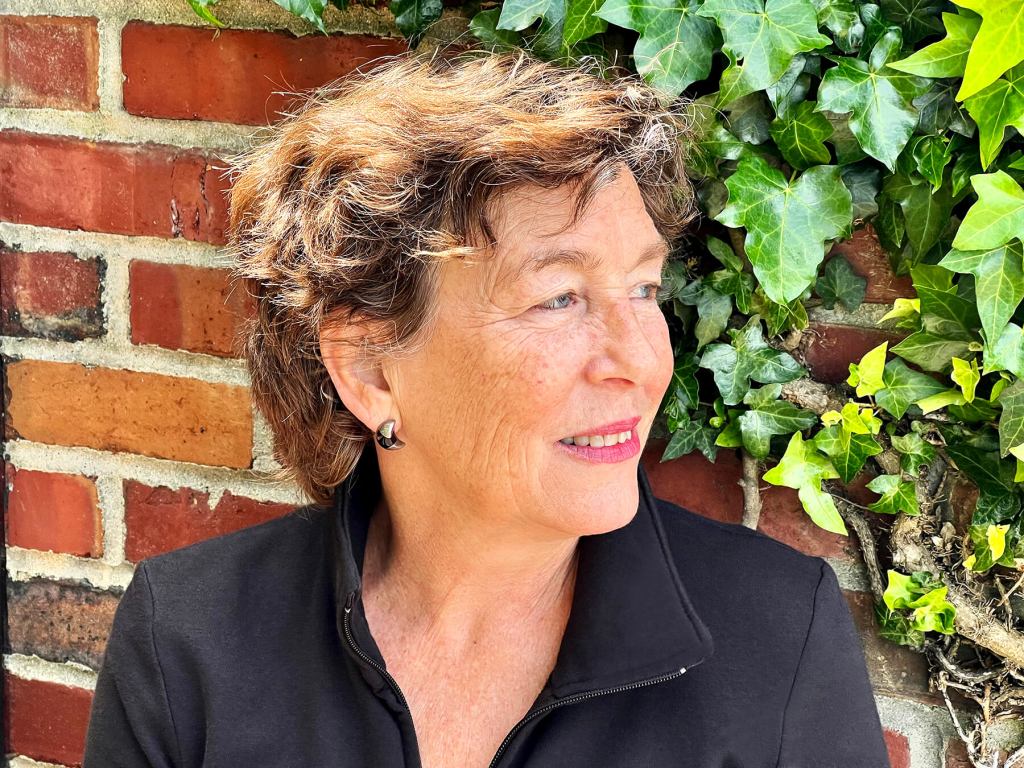
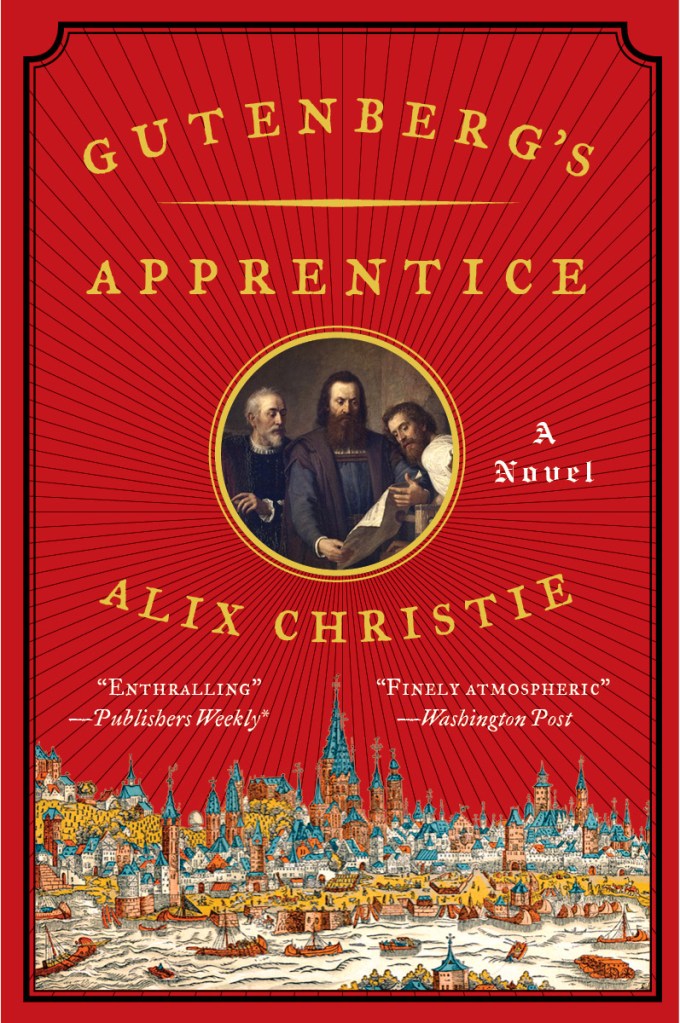
Alix Christie won the Gold Medal in the 20th-century category of the inaugural First Chapters Competition of the Historical Novel Society. She is the author of two historical novels: Gutenberg’s Apprentice, the story of the making of the Gutenberg Bible (Harper Books), which was shortlisted for the VCU Cabell First Novelist Award, long-listed for the International Dublin Literary Prize; and translated into a dozen languages; and The Shining Mountains (University of New Mexico Press), an Editor’s Choice title from the Historical Novels Review. Her short fiction has won the Editor’s Prize from the Missouri Review, a Pushcart Prize and been a finalist for the Sunday Times Short Story Award. An American-Canadian writer and longtime print journalist, she divides her time between Berlin, Germany, and San Francisco, California, and writes about culture for The Economist.
Website: https://www.alixchristie.com
 The Historical Novel Society UK 2024 conference
Leave a comment