
Rebekah Simmers has been interviewing writers who are presenting at the HNS 2024 UK Conference

RS: We are thrilled that you will be joining us for the HNS 2024 UK Conference! Can you share a teaser for your presentation?
CM: With author Helen Steadman, our session will focus on three audio books Widdershins, Sunwise and Solstice, which I narrated and hope to share some insights into the working relationship between author and narrator.
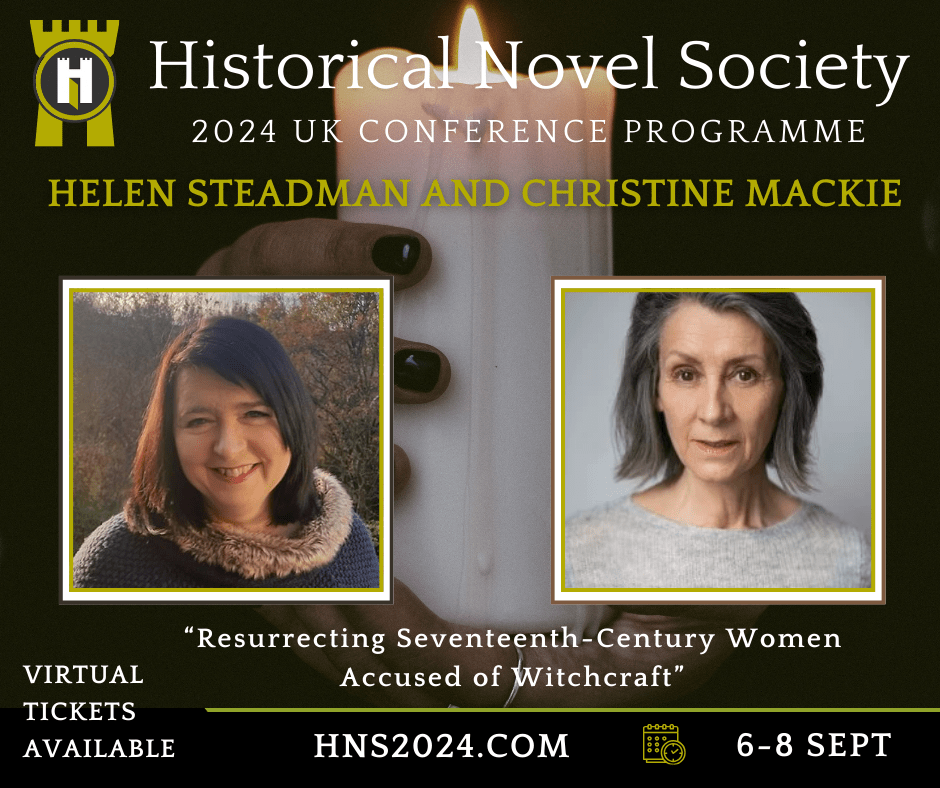
Christine Mackie is presenting “Resurrecting Seventeenth Century Women Accused of Witchcraft” with Helen Steadman at the HNS 2024 UK Conference
You’ve hit all the points when it comes to our conference theme – screen, stage, and writing plays, as well as narrating audiobooks. Quite inspirational! Can you share a bit of your journey with us to acting and writing? To audiobooks?
I’ve been fortunate to have enjoyed a varied working life in companies like the Women’s Theatre Group in the 80s who commissioned new scripts from writers at the beginning of their careers, like Deborah Levy and then on the BBC Radio schools rep, learning from such vocally skilled actors and all of these experiences have informed my work.
Looking back on your own varied career, how would you say your acting on stage and screen affected your writing and audiobook narration? How has that affected your writing process? Do you tend to “see your scenes playing out” as you create them? How do you think it affects your character creation?
Well I am very new to playwriting but I have been reading, studying, and performing in plays for 50 years so that’s perhaps a bit of an apprenticeship. As an actor I’ve always believed it’s my job to ‘serve the play’ and I want my work to stand up to the scrutiny of a rigorous rehearsal process. I’ve loved this latest phase of my creative life and am full of ideas but am very aware that there’s still a great deal for me to learn.
My first play Best Girl was semi-autobiographical so I knew the plot! But updating it and relocating where it happened gave me the freedom to tell the story in a whole new way. My second play started with an imagined conversation between two sisters-in-law, the characters weren’t fully formed but there was something there and added to an number of things that had been in the news and wanting to write a play putting older women at the heart of a darkly funny drama, somehow Kin revealed itself. I guess it was cooking for almost a year before I started to write it though.
What is a novel you’ve read over your life that unexpectedly grabbed you and whose words stayed with you?
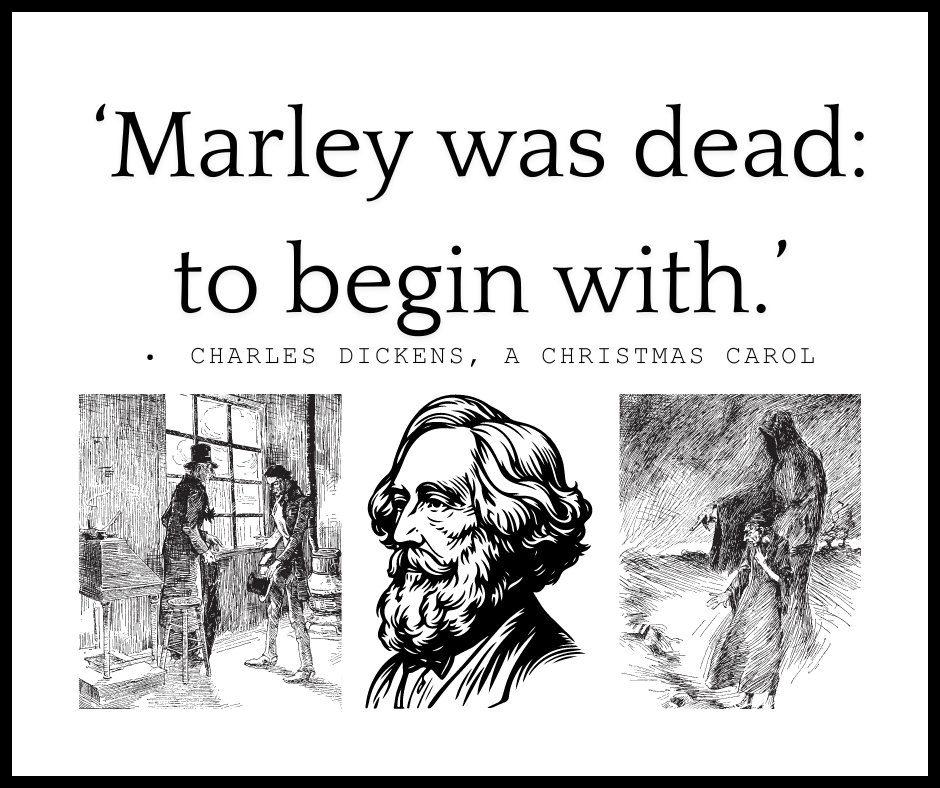
I can’t think why I didn’t read A Christmas Carol in my youth but I finally did in my 40s and I have pretty much read it every December since. ‘Marley was dead: to begin with.’ It’s such an ambiguous yet unequivocal start. I’m not learned enough to know if that was an unusual beginning in the 1800s, but it grabbed my attention and there is no book I have ever read that’s made me laugh out loud more. And it’s full of hope and I’m big on hope.
What would you say was the most influential writing advice you received from another author?
I’m an emerging writer (as they say) in that I didn’t start seriously to write until 2019 with my first play Best Girl, but the writer Russell T. Davies, whom I’d worked with as an actor, was so encouraging to me. He said that many people try to write or say they want to but to actually keep going, finish and make it happen is such an astonishing achievement. That meant a lot.
What do you think it takes to have longevity over an acting career?
I agree with Helen; perseverance and a thick hide (or a willingness to develop one).
When you’re going to narrate an audiobook, how do you begin your preparations?
I read and re-read the book, I make a list of the characters and I take note of what’s said about them and the quality of voice that I instinctively give them on my first reading. Sometimes authors have very specific accent instructions. Other times, they don’t want any dialect/accent at all, so then I look for other ways to differentiate the speakers in passages of dialogue.
Of the wide cast of characters in Helen Steadman’s novels, who has been your most challenging character to narrate?
John Sharpe, I think. He’s such a contradiction; that such a weak person can be capable of such heinous acts intrigued me. But all of Helen’s characters are rich and come off the page beautifully. Second favourite is Patience Leaton. She’s a bad ‘un.
If you could choose a historical event to witness, what would you choose?
I’d have loved to see Greek theatre when it was made, the first performance of The Trojan Women or The Wasps. I’d have liked to have seen William Shakespeare perform too and Sarah Siddons.
What three books are necessary for any book collection to feel complete? What additional one would you add for an author’s library?
- A Christmas Carol, Charles Dickens
- The History of Love, Nicole Krauss
- The Shipping News, Annie Proulx
- Josie Smith stories, Magdalen Nabb
What are you writing now?
I’m adapting Best Girl for radio and my play Kin opens at the Dukes Lancaster in September then tours to Queen’s Hall Hexham, Hull Truck, Alnwick Playhouse, Theatre Clywd and has a week at HOME in Manchester in October.
What was the last great book that you read?
This year I read for the first time the Cazalet Chronicles by Elizabeth Jane Howard.
Online tickets for the conference are available:
https://historicalnovelsocietyuk.regfox.com/online
Rebekah Simmers is a member of the HNS UK 2024 conference organisation team. Find out about her novel, The King’s Sword, on her website.
 The Historical Novel Society UK 2024 conference
Leave a comment