
Rebekah Simmers has been interviewing writers who are presenting at the HNS 2024 UK Conference

RS: We are so thrilled that you will be joining us for the HNS 2024 UK Conference! What are you looking forward to about the conference? Can you share a teaser for your presentation?
KM: At least 200 film or TV adaptations have been made of Dickens’s novels or short stories. I will be looking at his relationship with his illustrators to argue that this is a logical progression and examine some landmark screen versions.
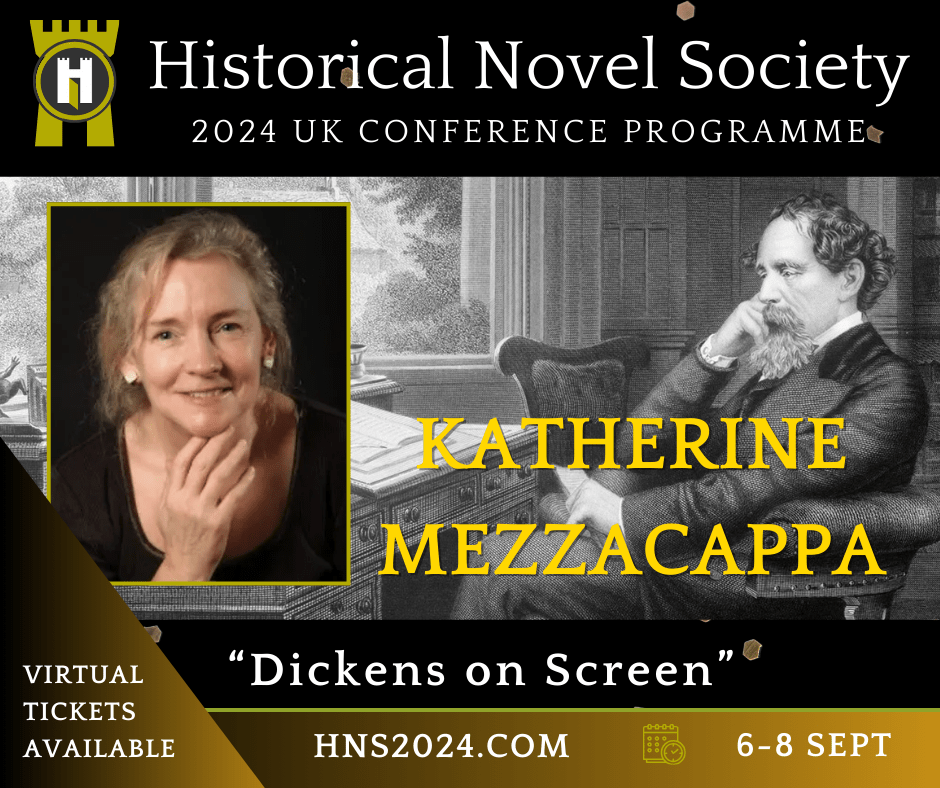
Katherine Mezzacappa is presenting “Dickens on Screen” at the HNS 2024 UK Conference.
Katherine is also interviewing Kate Quinn for her Keynote presentation, and Elizabeth Fremantle for her presentation.
Katherine is also part of the Conference Organization Team.
HNS has launched the First Chapters Competition with the conference. What is a novel you’ve read over your life that unexpectedly grabbed you from the opening lines and whose words stayed with you?
LP Hartley’s The Go-Between. I quote his opening words regularly as a starting point for anyone wanting to write historical fiction: ‘The past is a foreign country; they do things differently there.’
Looking back on your own writing career, what would you say was the most influential writing advice you received from another author? How have you made that work for you?
It’s quite simple, really. Stop messing about and procrastinating and just do it. This came in 2016 after a ten-year hiatus after my MA and it was the advice of novelist Anne Booth. Since that day I have published five novels, three novellas and twenty short stories and have another novel coming out in January 2025. You can’t revise a blank page is something I frequently say to others, often along with writing being a habit, not a hobby.
Of the wide cast of characters in your novels, who has been your most surprisingly challenging character to write? Why? What strategies did you / do you use for these types of characters?
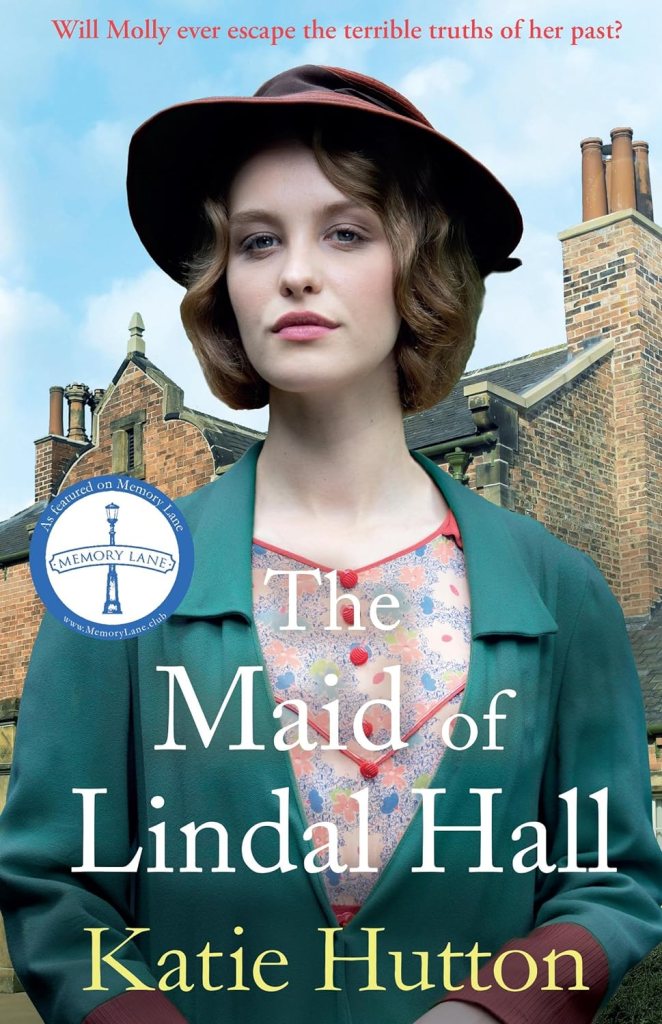
Writing the character of Sam Loveridge in The Gypsy Bride (by ‘Katie Hutton’). I saw him walk out of the trees after I read the chapter ‘The Dark Men of the Village’ in WH Hudson’s A Shepherd’s Life (1910). But in writing a Romani character I was up against the fact that a lot has been written about Romani people but until relatively recently usually not by Romanies themselves, and the only source I had to hand to start with was George Borrow. So I had to do a lot of work to identify misconceptions but I got help I could not have done without from a family of Kentish Romanies – as well as from academics in the field.


Katherine Mezzacappa also publishes as Katie Hutton and as Kate Zarrelli.
What do you think it takes to have longevity across a writing career? Sanity? Fun? What’s an unexpected joy that came into your life from such a successful career?
It’s just about keeping going. I write under three different names and in different styles (one of those names is for contemporary fiction) and seldom have only one project on the go at once. This means I tend not to get stuck, as I move from one to the other and in the meantime something I couldn’t see clearly tends to reveal itself. I don’t know about an unexpected joy, but there is nothing to beat opening the box containing author copies.
Where do you typically begin your research? Do you have a go-to resource? Has there been anything that you’ve researched for your writing over the years that made a huge impact on you or a novel or series that you were writing? That changed how you write or what you write?
I read colossal numbers of history books, usually without notes as I simply want to absorb what was happening. Of at least equal importance is reading what people read at the time to get the voice right.
So, for a novel set in the 1930s I read, amongst other things, Agatha Christie’s novels from that decade, though I wasn’t writing a crime novel. For another set in the 1950s I was reading Richard Hoggart and Geoffrey Gorer and of course all the “Angry Young Men”.

How do you organize your story details across your series?
I am not sure I organise anything, or at least haven’t thought about it. I tend not to write in a chronological way. I often start with a setting (but there are exceptions) as I am interested in the ways they, and in the broadest sense, upbringing, shape character. I usually know early on how a story is going to end, and from there write the scenes that work towards that end.
Is there a specific scene that you’ve written over the years that you feel especially connected to? If not a specific scene, a secondary story line that was a favorite to write?
The marriage scene in The Maiden of Florence. It’s the first time the couple speak to each other and neither has a choice about the marriage.
As a historical writer, if you could stand witness to a historical event or walk through a specific time / scene / building or have a frank discussion with one historical figure, which would you choose and why?
I’d want to be there on that night in 1848 in the Lutheran clergy-house of Stefan Ludwig Roth in rural Transylvania when the night watch brought him an abandoned baby. Roth guessed the baby was Hungarian and thus put him at risk but he added her to his numerous family (he was twice-widowed) and in his last letter before facing a Hungarian firing-squad the following year urged that she too should be taken care of.
What three books do you feel are necessary for any book collection to feel complete? What additional one would you add for an author’s library?
Thomas Hardy’s Far from the Madding Crowd, Giuseppe Tomasi di Lampedusa’s The Leopard, LP Hartley’s The Go-Between. We’d better have Wuthering Heights.
What can you share about what you are writing now? Or an upcoming release?
The Ballad of Mary Kearney will be published in January. I think it was probably the book I always wanted to write, from when we were grudgingly told about the United Irishmen in a Belfast primary school in 1974.
I have also embarked on my first series, Renaissance crime, featuring a surgeon who works in various Italian city states in an attempt to escape his nemesis. This involves far more plotting and planning than I am used to.
What was the last great book that you read?
John Williams’s Stoner (1965), for the greatness to be found in an apparently insignificant life.
Online tickets for the conference are available:
https://historicalnovelsocietyuk.regfox.com/online
Rebekah Simmers is a member of the HNS UK 2024 conference organisation team. Find out about her novel, The King’s Sword, on her website.
 The Historical Novel Society UK 2024 conference
Leave a comment