
Rebekah Simmers has been interviewing writers who are presenting at the HNS 2024 UK Conference

RS: We are so thrilled that you will be joining us for the HNS 2024 UK Conference! What are you looking forward to about the conference? Can you share a teaser for your presentation?
SBC: I am really looking forward to meeting up with fellow authors and friends. There are so many of them that I have only met virtually! It’s going to be so nice seeing them all in the same room! Oh, and the Bernard Cornwell talk! I have been a huge fan of Bernard since I was a teenager – I even dedicated my university dissertation to him.
Derek Birks and I will be hosting a panel based on the format of our podcast, A Slice of Medieval. We have three amazing guests, Elizabeth Chadwick, Matthew Harffy and David Gilman and will be talking with them about the highs and lows of writing historical fiction, looking at their research, character development. I am a non-fiction author specialising in women’s history, so we will definitely cover the portrayal of women in history.

Sharon Bennett Connolly, along with Derek Birks, is in conversation with Elizabeth Chadwick, David Gilman, & Matthew Harffy during the “Writing Medieval Panel” at the HNS 2024 UK Conference
HNS has launched the First Chapters Competition with the conference. What is a novel you’ve read over your life that unexpectedly grabbed you from the opening lines and whose words stayed with you?
My all-time favourite novel is The Three Musketeers, not so much for the opening lines as for the opening chapters -the idea of this young boy being bullied in his village, leaving to seek his fortune in Paris, and getting into so much trouble along the way. But he has such a good heart. I think D’Artagnan was my first love.
Looking back on your own writing career, what would you say was the most influential writing advice you received from another author? How have you made that work for you?
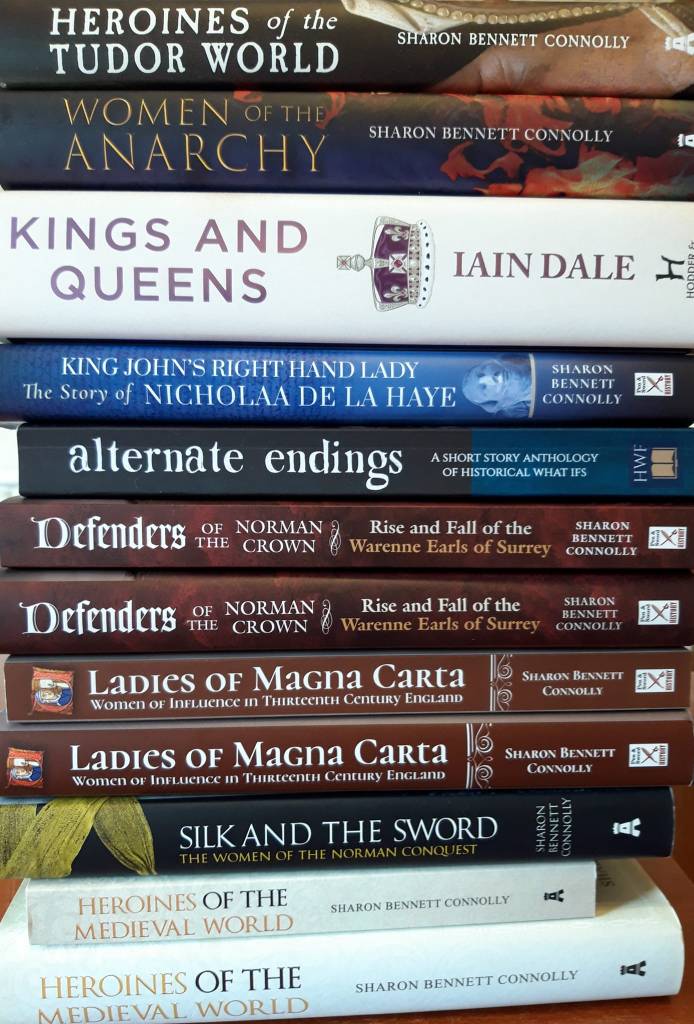
You have to love your subject. I write non-fiction and have written biographies of Nicholaa de la Haye and the Warenne Earls of Surrey. I have also written about the Norman Conquest and the Anarchy. You have to not only know your subject, but if you are going to spend two years on it, researching and then writing, you have to genuinely love the topic.

Of the wide cast of characters in your novels, who has been your most surprisingly challenging character to write? Why? What strategies did you / do you use for these types of characters?
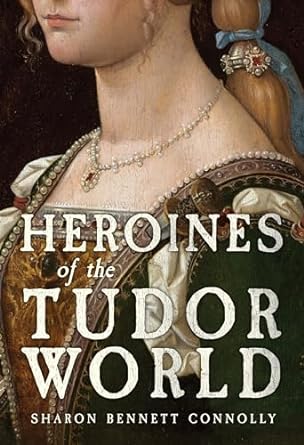
The hardest person I have ever had to write about was Joan of Arc. She was in the Warrior Heroines chapter of my first book, Heroines of the Medieval World. Her part was only 3,000 words long, but I had to get her right and was really determined to do her justice. A lot of articles these days suggest that she suffered from a mental illness – that she was hearing voices, rather than saints. I did not want to dwell on that. I don’t know if she was mentally ill or if she really was guided by God. I wanted to concentrate on her achievements. She was only a teenager and she achieved something rather remarkable, changing the fortunes of the French during the Hundred Years War and crowning the dauphin as King of France. Not one Frenchman had been able to achieve what this teenage girl did.
What do you think it takes to have longevity across a writing career? Sanity? Fun? What’s an unexpected joy that came into your life from such a successful career?
You have to enjoy what you do. I hate starting a new book. I get all this anxiety about not being good enough and that I should leave writing to others. But once I get started, the words just flow. And I remember that there is nothing in the world like holding your own book in your hands and knowing that you wrote every word.
Where do you typically begin your research? Do you have a go-to resource? Has there been anything that you’ve researched for your writing over the years that made a huge impact on you or a novel or series that you were writing? That changed how you write or what you write?
As a non-fiction author, writing history, my go-to sources are the chronicles of the time. Writers such as Orderic Vitalis and Henry of Huntingdon. Of course, I concentrate on women in history, so I cannot just read the chronicles and get all the information I need – the women are rarely given the limelight. So, you have to delve a little deeper, find out what their fathers and husbands were doing and then extrapolate their own part in the story. It is challenging but rewarding to give the women their time in the spotlight.
How do you organize your story details across your series?
Although I do not write fiction, my books do tend to follow on from each other, so I have to have continuity with the spelling of names; building your index as you go helps with this!

Is there a specific scene that you’ve written over the years that you feel especially connected to? If not a specific scene, a secondary story line that was a favorite to write?
There is a scene I have written a number of times, when Nicholaa de la Haye attempts to resign her position as constable of Lincoln Castle in 1216. She meets King John at the gates of the castle and hands him the keys, claiming she is too old (she was in her 60s) and tired to carry on. John returns the keys and basically tells her she is in the job until he says so.
It’s a dramatic scene and has so many connotations. Nicholaa is a woman and most people holding castles in those days were men – especially seeing as this was in a time of war. The ceremonial aspect of Nicholaa’s failed resignation gave John the opportunity to tell Nicholaa how much he trusted her – and to tell his men how much he trusted her. You can imagine there were a few of them whispering in John’s ear that such a strategic castle should not be in the hands of an aging widow – and that they could do the job better. But John trusted Nicholaa.
As a historical writer, if you could stand witness to a historical event or walk through a specific time / scene / building or have a frank discussion with one historical figure, which would you choose and why?
It would have to be Nicholaa de la Haye. She was constable of Lincoln Castle in the time of King John and held the castle during a months-long siege by English rebels and their French allies – when she was in her 60s. She held on long enough to give the English regent, William Marshal, time to muster an army and march to war. She was also the first woman to ever be made sheriff in her own right. I would love to sit and chat with her about so many things – what it was like to be a woman in 12/13th century England, what she really thought of King John, whether William Marshal was really as heroic as we think – and did she have a crush on him?
What three books do you feel are necessary for any book collection to feel complete? What additional one would you add for an author’s library?
Only three? That is mean! I do have a few books that I cannot do without. My Kings and Queens of Britain, which I got for Christmas at the age of 10, goes everywhere with me – it is the first thing to be packed whenever I move house, just so I don’t forget it. Robert Bartlett’s England Under the Norman and Angevin Kings is a wonderful resource (and rather expensive to get hold of these days). And can I have two more books? They are part of a series: the Plantagenet Chronicles and the Chronicles of the Age of Chivalry, edited by Elizabeth Hallam.
And one additional book? Ooh, choices, choices… The Anglo-Saxon Chronicles, edited by Michael Swanton. It is a fabulous resource!
What can you share about what you are writing now? Or an upcoming release?
My next book is Scotland’s Medieval Queens: From Saint Margaret to Margaret of Denmark. Although it actually starts with Gruoch, Macbeth’s wife, because my son asked me to set the story straight about Lady Macbeth after Shakespeare gave her such a bad reputation. I love Scottish history; it is so dramatic.
What was the last great book that you read?
Oh, that’s easy, Giles Kristian’s Arthur. It was just fabulous!
Online tickets for the conference are available:
https://historicalnovelsocietyuk.regfox.com/online
Rebekah Simmers is a member of the HNS UK 2024 conference organisation team. Find out about her novel, The King’s Sword, on her website.
 The Historical Novel Society UK 2024 conference
Leave a comment