
Rebekah Simmers interviews Lenore Hart, author of THE ALCHEMY OF LIGHT, which was the Grand Prize Winner of the 2024 First Chapters Competition at the HNS 2024 UK Conference.
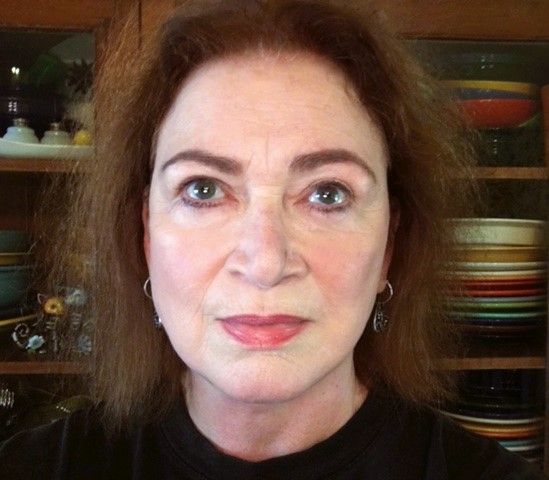

RS: Hello Lenore! We are thrilled you could join us! Let’s hop right in 🙂
How long have you been writing? What brought you to historical fiction?
LH: Forever, it feels like! In sixth grade, I wrote and drew, with a friend, a tabloid “newspaper” populated by animals, complete with comic strips and feature articles. It had a short run, though, as the teacher caught us pilfering drawing paper from the classroom supply closet and shut our little journalism project down. No doubt that made me determined to be published again in the future! Aa an undergraduate at University of Central Florida, I placed several short stories with the university’s literary journal, then after graduation began publishing poetry in various arts mags and literary journals. I earned an MLS at the library school at Florida State University in the 1980s. It was around then I began composing my first novel, at least in my head, as entertainment on the long commute to my first library job, as coordinator of two forensic-population libraries at Florida State Hospital. That became Black River, published by Putnam/Berkley in 1993, under a pseudonym, Elisabeth Graves. At the time, most publishers didn’t like authors to write in different genres under the same name, and I felt sure already that I didn’t want to be restricted to writing only in one genre, so I initially created that persona for my work in speculative fiction.
I wanted to keep improving my skills as a writer, too. By the mid-1990s I’d also begun teaching creative writing. Realizing I’d need a terminal degree for better opportunities, in 1997 I enrolled in a three-year program for the MFA degree at Old Dominion University. Then, on the first day, I learned they did not allow students to write “genre work” – only literary fiction. Initially I felt dismayed; if the thinking was that genre writing was just not good enough, wouldn’t it make more sense (and open more career opportunities for students) if you taught them how to do it better? But I did love historical fiction, and because historical events had played a part in both of my already-published horror novels, I went in that direction. I wrote mostly historical short stories to present in the workshops and, ultimately, a historical novel for my final creative thesis. That manuscript (set in 1920s Virginia, titled Waterwoman) was acquired by Putnam a few months after I graduated, and it became the first book published under my own name. I went on to do, to date, five more adult novels, a YA novel, and a children’s picture book with various NYC houses. Almost all were historical, and some feature well-known real people, like Virginia Clemm (wife of Edgar Allen Poe) and Mark Twain.
By 2010, though, I really missed writing speculative fiction, which I’d occasionally still been publishing via short stories in magazines and journals. I noticed the genre was seemingly of its own volition creeping into many of my novels, anyhow: as glimpses of a ghost, or via a dead narrator, or some other minor but eerie feature of the plot or setting. But my current publisher (SMP) did not acquire in that particular genre. So, for my next project in 2013 I began to create, with a small press, my own fantastic fiction anthology series, The Night Bazaar: an anthology based on the premise of a time-traveling exotic, supernatural bazaar which is run by an enigmatic, ageless woman named Madame Vera. The Bazaar appears in a city somewhere in the world, at some point in history, but only once and then never again, issuing in strange ways invitations to draw in certain people. Each story is connected to an object, service or person from the bazaar, and the “invited” are forever changed in some way.
I began work on Volume 1, set in present-day NYC, thinking blithely I’d simply do these anthologies between novels. Ha! The series turned out to be all-consuming; far more demanding in time and energy than I’d anticipated, working with up to a dozen other authors at a time, with the goal of making separate stories into a whole that reads as coherently as a novel. Well, this project basically took over my literary life for the next decade or so. Though I recently did manage to finally finish two novels I’d started almost simultaneously, before I began the series. One is The Alchemy of Light, whose opening was the winning entry in the HNS First Chapters Award competition. But it took all those years, in between creating and publishing the anthologies.
What can you share with us about your experience with the First Chapters Competition?
As I recall, I noticed the HNS First Chapters competition announcement in late December of 2023. I discovered I had a little free time just then (rare) and thought, I’ve always told my mentees and students to enter as many suitable contests as they can, and yet I haven’t done that myself in ages. So I spent that little break through January looking widely at upcoming submission deadlines, and discovered about ten competitions that seemed well suited to some of my poetry, short stories, and two novels in progress, including the inaugural First Chapters Competition.
The HNS First Chapters Competition was very attractive: a new competition from a very reputable source, with many judges (more chances to impress varied readers, there). It also offered a number of generous prizes – again, more opportunities. One of the historical genre categories perfectly fit my novel chapters entry (Fantasy/Alternate History/Time-Slip). And, while many contests utilize a single judge, often an author who publishes one particular kind of work, and might at least subconsciously prefer it, the HNS judges clearly varied in their tastes and specialties. All good signs that an entry would have a better-than-fair chance to at least possibly get shortlisted, especially since the contest fit all the details so well at the outset. These are the basic but important aspects to note which I’ve learned over the years when considering which writing contests to enter, and how to boost the chances my work will stand out. That, and polishing the hell out of a manuscript before sending it anywhere at all!
I was very pleased to be notified, the first week of May, that my entry was shortlisted for the Fantasy/Alternate History/Time-Slip genre category prize. And, of course, even happier to learn near the end of the month that it had won the First Prize Gold Medal in that genre category. Wow! That then put my entry in competition with those of eight other genre category winners for the Grand Prize, with that overall winner not to be announced until the 2024 conference in Devon, England at Dartington Hall, during the banquet on September 7th. Holy anticipation!

Lenore Hart, who has also published as Elisabeth Graves, is the author of six adult novels, including Waterwoman (a Barnes and Noble Discover selection) and Ordinary Springs (Putnam); Becky: The Life and Loves of Becky Thatcher and The Raven’s Bride (St. Martin’s Press), one YA novel, The Treasure of Savage Island (Dutton), and coauthor (with Lisa Carrier) of the picture book T. Rex at Swan Lake (Dutton). She’s also the series editor of The Night Bazaar fantastic fiction anthologies. Volume 2, The Night Bazaar Venice, was a Shirley Jackson Award finalist.
Hart has published short fiction, nonfiction, and poetry in various venues, literary and mainstream. She’s received awards, grants, and fellowships from the National Endowment for the Arts, three US state arts councils, the Oberpfalzer Kunstlerhaus in Germany, and the Historical Novel Society in Britain. A Fellow of the Virginia Center for the Creative Arts, she also serves on the Irish Writers Union and Irish Copyright and Licensing Agency’s executive boards. Hart, a creative writing professor for many years, has been fiction faculty at the Ossabaw Island Writers Retreat near Savannah, Georgia for 13 years. Her most recent publication is The Night Bazaar London: Ten Tales of Forbidden Wishes and Dangerous Desires (Northampton House Press, 2023).

What advice would you give some who’s preparing to enter the next one?
A little more advice about writing competitions: when I used to teach undergraduate and graduate creative writing at colleges and universities, I always encouraged students to enter their best work in at least one contest, for experience – if and when it was ready to be seen. It’s a waste of everyone’s time (and entry fees) to do otherwise, as more seasoned writers know. But even pros can still get a rush after finishing an early draft project they’ve been working on a while, and feel tempted to get it right out there. A feeling that, for all stages of one’s career is best ignored until it goes away, and a cooler head prevails. Having a new work or significant revision read by not just a trusted but a useful eye is also vital. Not a relative, friend, or neighbor who has no notable fiction-critic skills, and also a good deal at stake if they give an honest assessment that might offend the writer. Rather, another experienced writer or someone with fiction-editorial training is ideal, to actually get useful feedback on how well a manuscript is working, and where flaws still lie. I’m fortunate (though this wasn’t the case early in my writing career) to have a husband who’s been a published novelist for many years and a writing instructor and editor as well. I comment on and edit his work in return; it’s a very reciprocal good arrangement! Also I hold dear a few mature writer friends who will weigh in, too, at times.
I realize it isn’t this easy for everyone to get useful feedback – they may not have a workshop, community, or perfect First Reader at hand to turn to. That is when, if a project really matters, emerging writers might want to hire a reputable, professional developmental editor for at least an overall general assessment of the story or novel. To get specific, detailed, and expert feedback can be an absolute game-changer for writers early in their careers. We all work in solitude for the most part, and though you get used to this, still it takes a long time for any writer to fully develop high-level critical skills, along with the detachment (sans ego) needed to assess their own work objectively.
I give this same advice to participants in my Virginia community writing workshop. Also to participants I work with a couple times a year at the Ossabaw Island Writers Retreat in Savannah; the long weekend version is coming up this October. Those writing retreats are an opportunity to help new writers progress to publication, and I like to give back, when possible, the same kind of opportunities I sometimes was gifted with along my road to becoming a writer. Passing on advice, evaluations, and line edits, plus renewed energy to emerging writings. I can actually see the progress they make in just a few days. It reminds me all over again why I love to both write and teach. But the truth is, I also do it for myself, to spend time on a beautiful, unspoiled island with a wild setting (and interact with the adorable miniature donkeys in residence!) I get recharged as well. Any writing retreat – whether for a month, or just a two- or three-day escape from the rest of the world – can be an immense help to get work done and remind one why they want to be an author. I’ve long used such retreats to give me time to complete a project when work and other obligations are making it impossible to do so at home. And some (Ossabaw, and the Virginia Center for the Creative Arts come to mind) also offer full or partial merit and / or need-based scholarships to accepted participants.
One last word about contests: after I submit to them, I do this thing to stay sane: once I’ve submitted, I decide I’m unlikely to win, but that it doesn’t matter because it’s a good thing just to keep my work circulating out there. That mental connection alone is beneficial. And of course, who knows? I could be wrong. (As I found out at the HNS conference.) So I try not to think about submissions of any kind much, once they’re gone, until some actual results are announced. I’ve learned to default to this tactic over the years to avoid getting obsessive, and developing a circular thinking state of mind. It’s best to let such unknowns go. The only thing worse than worrying endlessly about manuscripts out in the ether would be obsessing about the movie rights process. I’ve had a couple novels optioned, though not made, in Hollywood. The latter experience could drive anyone crazy far faster than potential publishing deals, because film rights stuff almost always falls through, in the end. The prize to keep in mind, always, is not the contest you’ve already entered, but what you are doing now, and what you’ll work on and send out next!
What do you think are the benefits of entering a competition?
As I noted above, the benefits of entering reputable, supportive writing competitions can be manifold. Not all contests are created equal, of course. There are scams out there to beware of, or even just massive annual competitions that seem to pick the same old names or same types of writer, endlessly – but are still happy to take a thousand other fees, too, in the process. Thus, the HNS competition clearly shows its advantages and potential worth to any historical writer from the start. It was organized by a well-established, reputable organization specifically created to advance and support historical novelists; a large of group of diverse, talented, and interesting people with a common goal or two. And the details of the competition itself, at all its various stages, were carefully crafted to give as many entrants as possible several chances to be rewarded for their hard work, especially with the many readers and judges, and repeated rounds of assessment involved.
Was the HNS 2024 UK Conference your first HNS conference? What was your favorite part of this particular conference? How has it inspired your writing afterwards? Was there any session or particular advice that gave you a lift as you continue on with your stories?
The 2024 HNS Conference was the first one I’ve attended in person. It was initially my husband’s idea. He’d been wanting to visit an “ancestral castle” in Wales for some time, while I had long hoped to see the fossil cliffs on the Jurassic Coast and visit 19th-century paleontologist Mary Anning’s museum in Lyme Regis (conveniently, only about an hour and a half from Dartington)! David saw my winning the Genre Category award as a clear sign that it was time for all of this to happen. Though at first the plan did not appear auspicious, for reasons I’ll detail in a moment. But the idea of the conference, like the competition, already had me in thrall. It looked so interesting, so well-organized and well-promoted, all the offerings so thoughtfully laid out. Something for everyone, but not so much excess you felt assaulted by conflicting times and events. Unlike with many US conferences (anyone who’s ever been to the massive crush of humanity that is the annual AWP Conference or the bigger Sci Fi/Fantasy cons knows exactly what I mean.)
The prizes and award certificates were both generous and attractive. When I entered I’d had no serious thought of flying from Virginia to England, even though the 2024 conference looked mighty appealing. Bernard Cornwell! Diana Gabaldon! Medieval hall! Acres of gardens! It was pushing all my go-for-it buttons . . . but I already had a lot else going on; including a long-scheduled major surgery in late July. Less than six weeks prior to the start of the HNS conference. So well before the hospital date, I asked my surgeon if he would agree to release me for international travel slightly short of the normal six-week recovery period – if all went well. When I told him why, he readily agreed. Then David and I went online to book flights and make room reservations.
We arrived at Dartington from Exeter airport, exhausted from a straight 24 hours of taxis, planes, layovers, trains and more taxis. I was also still encased in some serious post-surgery compression garments that felt much like an old-fashioned corset. So – in a way, appropriate dress! Then I found myself (unlike with the terrain in our flat, seaside landscape at home) trudging around Dartington very slowly at first, up steeply-sloped roads to get pretty much anywhere. But I didn’t care, even as I was again forced to pause and pant for a few moments, because I was there. I’d made it! In the end the conference was also a great health plan, as it provided a tempting recovery goal. And now I was reaping the benefits not just of winning an award (at that point, one of the Genre Category first prizes) but also a chance to meet more writers from other countries, one of my favorite pastimes. Also, it was a unique chance to hear talks and panels specifically focused on historical fiction, while also seeing some places I’d only to date read about. And to finally meet in person a writer friend from Ireland; someone I’d only seen online for the last half-dozen years, novelist Katherine Mezzacappa.
To pin down my favorite conference sessions would be hard. I did not attend a single event that I felt disappointed in, afterward. Like everyone else, I thoroughly enjoyed Bernard Cornwell’s entertaining talk, since I’ve both read and watched The Last Kingdom – twice. And I’ve read some of Diana Gabaldon’s series, and just put the streaming series on my Watchlist. Having studied 19th century British Lit at university (I am one of the few people I know who actually counts Bleak House as a favorite novel) I was riveted by Katherine’s talk and slides in her Dickens’ “Page to Stage to Screen” lecture. Every presenter seemed both assured, and knowledgeable, as well as accessible. As a closet archeologist and secret wannabe medieval and ancient-world novelist (in my next life, maybe) I really enjoyed the “Writing Medieval” panel and “Taking the Romans Public.” It was tough sometimes to decide which competing session to attend, so I hope to attend future conferences in Britain to make up for that!
At the Saturday night banquet, as Kate Quinn, one of the three final judges, was at the mic about to announce the Grand Prize winner, I was talking to a friend at our table. As I leaned back again to pay attention to Kate’s announcement, I heard the title of my novel manuscript already being spoken. Startled, I blurted out (rather loudly, I’m afraid), “No way!” Now, earlier in the week my husband had suggested that I prepare some brief remarks in case I won. But I’d already convinced myself that scenario was unlikely (according to my usual process) and so had ignored his sage advice. Thus, a few moments later I found myself more or less propelled onstage, standing in front of a mic with a totally blank mind. I did manage to babble some sort of stunned but heartfelt thanks to everyone, I think. Then I received a hug and whispered congratulations from Kate, who whispered, “I really want to read the rest of that novel!” A few photos were taken, and I went back to my seat clutching the gold medal certificate and a beautiful wood plaque. Many kind people came up to congratulate me. And all I could think at that moment was still a pretty inarticulate Wow. The amazing fact of the win itself didn’t really sink in as reality until the next morning.
In the end, the conference inspired me in various ways. With a sense of community from being among so many writers from far-flung countries yet with a common craft and purpose and love was immense. And, speaking to benefits more specifically, I must give a shout-out to Canelo editor Craig Lye for his incredibly concise yet detailed and spot-on assessment of the pages I’d sent him from a different novel in progress. That 15-minute session was practically worth the trip across the Atlantic all by itself! I left the One2One feeling as if I finally grasped what was left to be done about a few problems I’d been wrestling with forever on that particular manuscript. These thoughts are still with me as I look at my work calendar to decide when I can get back to it and begin to apply his insights.
So when I conclude that the overall conference experience was priceless, for me that’s not hyperbole. It was the kind of experience that keeps a writer going at any stage, whether you have a contract or a new book out yet, or not. It makes a finish line a bit easier to envision. And the feeling of community lingers long afterward, connecting one to the craft, and the rest of the world, present and historical.

What is your elevator pitch for THE ALCHEMY OF LIGHT?
While I’ve gotten pretty skilled at creating elevator pitches for other writer’s manuscripts over the years, I still have a much harder time turning out good ones for my own. I think this short, pithy type of summary works far better when the crafter can apply a cool, distant, objective assessment. The writer herself often finds it hard to resist stuffing in more and more specific details, and then the darned thing is no longer elevator length at all. So it took me quite a while to get one for Alchemy done to my satisfaction. Here it is:
In rural 1880’s Missouri, a traveling Daguerrean photographer of the dead rescues a mute young woman whose parents were gruesomely murdered, and discovers she has an eerie talent related to his line of work. But the wolflike killer follows them east to New York, and their paths again collide during a controversial death-chair experiment at inventor Thomas Edison’s New Jersey laboratories. There, in a shocking climax, the convergence of science and magic results in a fantastical transformation.
Where did the idea for the story come from?
The idea for the story first came from a link my husband sent me a few years ago (“This will intrigue you”) to a website of post-mortem silver-process photographs taken in the mid- to late-19th century. Victorians in both the United States and Britain had a far different outlook on mortality than we do now. Surely in great part due to the fact that – with so many fatal childhood illnesses, and adult diseases (over 25% of the world’s population was then infected with tuberculosis, and no cure) – death was omnipresent in their daily lives. But, just as we do, they liked to keep mementoes of loved ones. However, early photographs were quite expensive, assuming one even had access to a studio, and many small towns and rural areas did not. So itinerant photographers were born. For a family without great means, the only image taken of a dead infant or recently-deceased parent might be a cherished post-death photograph, to be displayed on the mantel.
I also infused the novel with a particular Norwegian folk tale about wolves and witches, one brought by Scandinavian immigrants to the American Midwest. And worked hard to set up a basic thematic conflict and narrative tension through juxtaposing rural and urban, and science and magic. To look at this 19th-century period as the beginning of the demise of Wonder and Awe, as some scientists and inventors believed they were closing in on and could actually know all of life’s secrets, while discovering ways to control the world around them. Thomas Edison, who was at this time inventing an early version of the electric chair, is one of the story’s antagonists. And gradually, The Alchemy of Light evolved.
The First Chapters Competition focuses on the strength / quality of openings. What made you decide to choose the opening that you did? How did you know it was the right place for your story to begin?
By the time I entered the First Chapters contest, I felt certain I had a good, strong opening, because though the whole MS was still in early draft, the first fifty pages or so had been through so many readings, peer critiques, and revisions. Although, until a few months prior, what is now the second chapter had originally been my first chapter. But I kept thinking about one criticism from an early reader: she’d wanted to know more about my young female protagonist sooner in the story, in an active scene, rather than find out more later on, which was how it read then. So I took what had been a later flashback to her childhood, a dramatic incident that vividly represented all the betrayal and loss and injustice meted out by an abusive parent, and used that to make Marit more real and empathetic at the outset. The added benefit was that this change simultaneously brought the story’s inciting incident (the murder of her parents, as she barely escapes with her life) up front. I ended up with a far more compelling and enlightening access point for my novel’s opening.
Are the characters real / historical figures, a mix, or all yours placed within a historical event?
The two protagonists, Marit and Homer, are fictional, influenced by research of the settings and time period and customs and manners. They are young adults from polar opposite backgrounds, which creates more tension as they inhabit their different places in the story. Each one sees the other as naïve, though about very different facts of life. The killer/antagonist, Wolf, is taken from Norwegian folklore and blended with the what-if notion of a creature transmuted from its original species into something alien and other to its whole up-to-then lived experience.
I also used some real, famous historical figures, including P.T. Barnum and the aforementioned Thomas Edison (a great antagonist; rich real-life material there) along with some of Edison’s actual laboratory employees. So the novel is a wide mix of many human aspects, character-wise.
Is it a stand alone or part of a series? At what current stage is the novel? Is it under contract?
It’s not part of a series, but a standalone work. I recently finished it to my at least temporary satisfaction, and as of about a week ago it’s being considered by an agent who contacted me to request the full manuscript.
Is there a release date or somewhere people can follow you to find out? A place to pre-order now or where to follow you for this information?
I have no release date to reveal yet, alas. But any interested readers can keep track of AoL’s progress by following me on my social media accounts (listed in the early part of this interview) or by checking my author page. I’ll definitely be posting any updates and good news for HNS members, faithfully!
Thank you for all of that, Lenore! And CONGRATULATIONS again on your win! 🙂
With Lenore’s permission, we are pleased to share with you an extract from the opening for THE ALCHEMY OF LIGHT by LENORE HART, our GRAND PRIZE WINNER of the 2024 First Chapters Competition
Man Skin, Wolf Skin
Southeast Missouri, 1887
Marit stood in the cabin’s sandy front yard, casting handfuls of cracked corn to the flock of clucking white hens that swirled and squabbled at her feet. Caring for the chickens had been her chore for over a dozen years, ever since she’d been old enough to descend the rickety front steps on her own. She hummed as she fed the birds, shivering in a cool October breeze, and trying to drown out the raised voices inside the cabin. One, deep and loud, was her stepfather’s. The other, a placating murmur, her mother’s. The arguing was nothing new. The only difference would be in how angry Far might get, and what he’d do to her and to Mor, in the end. Inside the cabin, the hours were shaped by fear.
Marit preferred to be out here.
She pushed away the blond hair blowing across her face. Her mother had braided it for her, but out in the wind long, fine strands always escaped confinement to tickle her face. She glanced up at the sky. The sun, a pale eye fixed upon her, seemed weaker now that autumn had arrived. Its light didn’t really warm the air.
She realized then she hadn’t yet counted the chickens, also her job, and did so then.
One fewer hens than yesterday.
She frowned. That was strange . . . and where was Frost?
Her pet rooster wasn’t among the hens. She looked around but he wasn’t in the dooryard, pecking at bugs and worms. Had he wandered off into the woods? She went to the edge of the trees and, peering in, thought she saw a hint of movement. An impression of something large and dark, though. Perhaps pale brown fur or hide? Most likely a curious deer, drawn by the scent of cracked corn. But there was no sign of Frost.
Last year she’d made a pet of the runty chick, son of a pale Dominecker, his feathers speckled like new snow on dark garden soil. So she’d named him Frost, and from that day on the cockerel had followed her everywhere. Her stepfather scowled when he first noticed this. But her mother, Sofia, had told him a child needed company, even a girl almost grown.
“And that bird? Too skinny even for the soup pot,” she’d added, smiling and stroking her husband’s arm.
Marit had looked away, disgusted. She’d never understood why her lovely mother, so tall and strong, always acted meek and agreeable to her husband, even hunching her shoulders to make herself look small. Cajoling and placating Far no matter how cruel he acted.
The list of Marit’s sins was endless, according to him. So she kept out of his way as much as possible, having long since realized that a father wasn’t someone who loved and took care of you. But then Far wasn’t really her father, as he so often reminded her. That was a mystery so old now she’d stopped prodding at it.
“Frost? Frost!” She whistled; that usually brought the rooster running. But not this time. Could he have been taken by a fox? Marit hadn’t seen any skulking around lately. There was little at this poor place, except the hens, to draw a predator. But it was possible.
She whistled again. A bird came scurrying from around the back of the cabin, wings lifted as if to say: Here I am!
Marit’s heart lightened for a fraction. But it wasn’t Frost, only the missing white hen.
She set down the empty feed pan and went looking. Not in the dooryard, front or back. Nor behind root cellar or tool shed. She ventured into the woods, calling. “Frost? Frost, come!”
No answer there but the sigh of wind through the pines.
More worrisome to her was how she felt now, as she walked under the pines, with the sense she thought of as Darkness. Normally, if she followed its pull, the feeling led her to its source. A dead squirrel. A decomposing hen, expired of old age. A dying rabbit already riddled with maggots. But this time the enveloping sensation was like a heavy cloth flung up and then settling over her head and shoulders. Muted and confused. It had no clear direction.
Deeper in the trees there came a prickling between her shoulder blades, a new perception: eyes are watching me. She stifled a gasp and wheeled to see who was there.
Something heavy thrashed clumsily away through trees and brush before she got a good look. Again she was left with only a glimpse of pale hide. So, not a predator, if it was afraid of her. No doubt a deer, curious but harmless. She resumed searching until she noticed the shadows lengthening and reluctantly went inside, worried she was late to supper.
Mor had already set out the tin forks and spoons. Far sat stiffly upright in his larger chair at the head of the table. Shaggy gray hair straggled down his neck; his hands were as always black-nailed and grimy. A familiar smell rose from him as she passed: stale sweat, musty flannel, and vinegar.
Marit slipped into the seat at his right, folding her hands in preparation for grace.
Mor was tall and graceful but too thin. Her blond hair never seemed to gray, and hung plaited neatly in a waist-length braid. She stood ladling something from a big black pot hanging from the crane, the large iron bracket bolted inside the stone fireplace. Then carried two tin plates of a pale, steaming stew to the table, setting one in front of her husband, the other before her daughter. At last she returned with a modest serving for herself and took her place at the other end of the table, opposite her husband.
Far cleared his throat. “Almighty God, pardon our many sins. Bless the food now before us to our bodies’ use, and bless us to your service.”
Our many sins? thought Marit scornfully. Then why was it none ever seemed to be his? Despite the bottle hidden on a high shelf which he pretended did not exist. The one whose amber contents grew ever lower, fueling more rages.
“Lead us, the unworthy, to repentance and redemption every day. Through Christ Jesus, Amen.”
She and Mor murmured in unison, “Amen.”
Marit looked down at the plate. White chunks of stewed chicken, mingled with a few coins of woody orange carrots, chopped wild onions, and cubes of slightly spotted potato, all suspended in pale yellow broth. She lifted the spoon and took a sip.
“It’s good, Mor,” she told her mother. Sofia was a good cook, considering the few ingredients she had to work with. Yet Marit hadn’t told the truth, exactly. Somehow this stew tasted odd. Somewhat . . . bitter? Not spoiled, though she detected a faint insinuation of deadness there. It tasted, well . . . sad was the only word that seemed to fit. Though that was surely an odd term to apply to a serving of soup.
Gradually she realized her father was sitting too still at his place. Instead of digging into supper, as usual, he was watching Marit eat.
She set the spoon back on her plate so quickly it clattered against the bowl, then sank into the greasy yellow broth. She knew better than to raise her eyes to look at him or to speak unbidden. But something was wrong. Perhaps with the food. Or, more likely, with her. Though she hadn’t propped her elbows on the table or reached across for bread or talked back, or taken more than her share.
“Enjoying your supper?” His tone was mild. The thick vein in his forehead wasn’t pulsing. His expression seemed bland; the narrow, weathered face almost at peace.
She nodded, whispering, “Yes, Far.” Then quickly corrected herself. “Yes, Father.”
He disliked hearing the old tongue. Norwegian, Sofia’s native language. Though she and her mother spoke it to each other when he wasn’t around.
Far smiled. A rare, unpleasant twitch of the lips. “Tender, isn’t it?”
She nodded. “Yes, Father.” The meat was better than usual. Not stringy and chewy, as when Sofia stewed one of the old hens whose laying days were long past. So Far must’ve butchered the missing hen . . .
But no. It had come running when she’d whistled.
Only then did the idea rise in her mind like a dead fish bloating in a pond, turned belly-up.
“Frost,” she whispered, glancing at the iron cookstove, the crusty black cast-iron pot sitting atop it. As if her beloved pet might rise, wafting up ghostly from its depths in answer. She had been eating . . .
No. No.
Why hadn’t she suspected as soon as she’d seen her stepfather’s gaze so intent on her, with that unblinking, cold curiosity? It would be just like Far, who prided himself above all on thrift and a farmer’s lack of sentiment, to do such a thing. But there was always more behind his actions than mere economy. The only surprise was that he hadn’t taken up the hatchet in front of her and made her watch. As a lesson. He was so fond of giving those.
To Marit’s right, Sofia sighed almost silently, but didn’t look up. Only set her spoon back on the dish, keeping her gaze fixed there.
Marit suddenly recalled the unchewed bit of bird-flesh still sitting on her tongue, and gagged.
“Waste not, girl.” Far frowned, fingers twitching on the table’s scrubbed pine top as if each one longed for the leather strap punctured with evenly-spaced holes. Or to again feel a stick of kindling in their grasp. “Rejecting good food is a sin before God.”
She swallowed back the bile-soured broth that’d gone down but now was rising again in her throat. Meaning to only nod, as was expected. To say, Yes, Father, and take another bite. But it was impossible. She could not. Couldn’t go on eating Frost.
She shook her head, eyes averted from the plate. “I . . . sorry, but I can’t . . .”
Far half rose, looking at the strap suspended from a nail on the wall. “Or shall I teach both of you a much-needed lesson?”
Marit bit her lip and quickly picked up the spoon again, loading it with more stew. Closing her eyes, one by one she choked down all the murdered pieces of her pet. Finally, after this Judas meal was done, she whispered, “May I be excused, please? To visit the privy.”
Far nodded once, grudgingly.
Outside, in the sulfurous confines of the rickety lean-to, she bent forward over the splintered wooden seat and stuck a finger down her throat, weeping. Then vomited, again and again, to set Frost free.
***
That night she climbed the ladder to her sleeping loft, quickly undressing to her shift. Then slid shivering beneath the worn quilts on her straw-stuffed pallet. She turned onto her side, facing away from the rest of the cabin. Away from them both. But her eyelids refused to close. She glared into the dark, until she felt surprised her gaze didn’t burn a hole in the loft’s back wall.
A few minutes later there came a faint creaking. The weight of someone lightly ascending the ladder. Her mother’s head, then shoulders, emerged above the floor of the loft. Carrying a lantern, she stepped over to Marit’s pallet.
She smiled, lay down beside her daughter, and stroked her hair. “Dyrebare barn.” Precious child.
Marit threw the hand off. “I wish him dead,” she hissed, not wanting Far to hear. “Oh, Mor, I wish – ”
“No. Do not say such things. Bad for the soul.”
“I don’t care. You grovel to him like a dog. I hate it. I wish both of you were– ”
Dead.
Sofia pressed a finger softly to Marit’s lips before that last word escaped. “A curse can’t be taken back.”
Marit brushed her hand away. “How could you ever . . . why must we stay? He’s a monster.” Surely her mother couldn’t ever have loved him.
“For my soul.”
This was always her enigmatic answer. It infuriated Marit. Her mother harmed no one, was good to everyone, kind and patient. “Why would God expect you to suffer so, for no reason? Your soul isn’t – ”
“Because I had none, before,” said Sofia. “I was not then as I am now.”
That made no sense. “Everyone has a soul. Even he says so.”
“How can I explain it,” Sofia murmured, as if to herself. “I can only tell it in a story, I think. One of the old tales.”
A tale? Marit snorted. As if she was still a child! But her mother was an excellent storyteller. “Which one,” she muttered at last.
“I think you will recognize it,” said Sofia. “But listen more carefully this time.”
And then she began. “Once, two brothers from Valldal went off to hunt rabbits in the wood.”
***
Once, two brothers from Valldal went off to hunt rabbits in the wood. They took a narrow footpath instead of the Trollstigen, a road frequented by fierce mountain trolls. They hunted all day, with no luck. So, as the sun dipped low they decided to head home, but a heavy snowfall had hidden the road back to their village. They wandered in the forest, lost and starving, for days. Finally, near dead of cold, they came upon a stone cottage, its red-painted door ajar.
The single room within was much larger than they’d expected. A fire blazed in the tiled stove. A nearby table was heaped with bread, cheese, smoked fish, and rabbit pies still hot from the oven.
The brothers ate ravenously before noticing something lay in a heap in one shadowed corner: several naked men. They couldn’t be roused, even when the brothers shook their shoulders and shouted into their ears.
“They sleep like the dead,” the eldest told the younger.
Who said, “Oh, but look at this.” He pointed to pelts hanging from a row of wooden pegs above the sleepers. “Wolf skins. They’ll keep us warm!”
Each brother took one and draped it over their shoulders. Immediately their noses grew long, their skin sprouted fur, and their nails hooked into claws. The hides fused to them like a second skin. Then they understood. Those “men” sleeping in the corner were under a spell, and the brothers had just donned their actual skins.
They’d stumbled into the lair of a soulless forest witch. When she returned no doubt she’d enchant them, too. For forest witches grow lonely in winter, and long for human company.
“God save us, what shall we do?” cried the youngest in the strange new tongue of wolves, which they both now understood. “We feared trolls, but are caught in the claws of a witch!”
“We must burn the place down,” the older one growled. “Like Odin with his lightning. Then flee.” They grabbed sticks of kindling in their jaws, to set the cottage alight.
But already the red door was slowly swinging open on oiled leather hinges. A beautiful golden-haired woman stood on the threshold, smiling in at them. The witch was home. What’s more, they recognized her: a young blond woman from their own village. The midwife and healer who made charms to bring love, healthy babies, more money, or better milk from a cow.
The eldest lunged for the stove. He lit his kindling, and touched it to a pile of straw which burst into flames. The younger did the same. When the wolves looked back again, the witch was gone. They tried to wake the sleepers, but to no avail, regardless of how they pawed or barked or nosed. They left the ensorcelled to burn and fled into the forest.
After they’d run many miles the eldest said, “Brother, you’re no longer a wolf!”
It was true. The enchanted skins flapped about their shoulders and they ran on two legs again. Ahead lay the path back to Valldal, clearly visible now. When they reached the village they told everyone of their adventure. Then a mob gathered outside the young healer’s home, but none were bold enough to enter.
“She must burn!” shouted a pious elder. Everyone knew forest witches had no soul, and no salvation, unless a good Christian man deigned to marry them.
Still no villager worked up enough courage to lay hands upon her.
“No doubt she converses with draugrs and djoflar – even Satan himself,” cried the butcher. “We must send to Oslo for the Witch Hunter!”
“No!” The village women protested. “We need our healer.”
“She delivers our babes,” said the baker’s wife.
“She protects us from harm,” wailed the innkeeper’s daughter.
But the graybeards, those dour elders, had made up their minds.
At that moment the young witch stepped out of her cottage to face them. “Send for whomever you like,” she said scornfully, flinging a long golden braid over one shoulder, clenching her hands into fists. “I won’t stay to meet them. Nor tarry in a place where no man will marry me, and stupid boys who burn innocent men alive are called heroes.”
And then, before their eyes, she dissolved into a plume of smoke which vanished like morning mist.
The brothers were indeed hailed as heroes then. They drank many free cups of ale in the tavern, until they caused such a ruckus the innkeeper tossed them out.
And the witch? She was never seen again. Some villagers claimed she’d mounted a broom. Others said she’d sailed the Viking winds across far-off lands and seas, headed to Iceland. Or perhaps, whispered the older women, who knew more of such things, she’d gone even farther, to make her home in the New World.
Afterward, the villagers all lived happily, for a time. Except the milk soured more often. The wheat dried up too early in the fields. Butter failed to thicken in the churn. And far more babes were called to Heaven right from their cradles, ever since their village had been freed from the curse of the witch’s evil influence.
***
Marit yawned. “I know this story. You’ve told it before.”
“Já.” Her mother nodded. “But think on it more, and you may understand better.” Then she kissed her daughter’s cheek, picked up the lantern, and descended the ladder. The light went out, below, and Marit lay alone in the dark. Soon her stepfather’s hoarse snores rose. She put her head under the quilts and finally fell asleep.
Sometime later she sat up abruptly, gasping. It was not yet morning. She felt Darkness, the heavy pall of it, hovering nearby. Outside the cabin, though, or inside? She lay rigid, listening, feeling suffocated. Wishing there was even a small chink in the loft wall from which to see the moon. Still, she heard nothing out of the ordinary.
At last she rose, climbed quietly down the loft ladder and walked over to her parents’ bed near the fireplace. They were both asleep; Far snoring, a cap pulled low on his forehead. Mor breathing softly, one pale arm outflung, her thin body barely lifting the quilts. They were alive, not dead. Not looking cursed at all.
Marit shook her head, remembering the terrible wish she’d made earlier. Feeling silly, and a bit less sinful, she climbed back up to bed.
Halfway up the ladder she paused. I should’ve at least apologized while I was down there, she thought. Not to Far, for things would go badly if she woke him now. But she could whisper softly in Mor’s ear. Sofia would accept and forgive the sin Marit had committed against her. Perhaps you couldn’t take back a curse, as Sofia had said. But she could at least assure her mother she hadn’t really meant it.
She started down again. But as her bare toes touched the third rung from the bottom there came a muffled thump at the cabin’s only door.
She froze, holding her breath. No one else lived around here for miles. And what sort of traveler would be passing through on an isolated wagon track in the middle of the night – much less stop to knock on their door?
From the sleeping corner across the room came the rustle of bedclothes. A faint questioning murmur from her mother. Her stepfather’s muffled curse as he sat up.
Another thump came, so hard this time the door shuddered. Marit hopped off the ladder and pressed herself into the dark corner opposite. Was someone breaking in? Again she felt the Darkness, stronger now. She wanted to go to her mother, but could not bring herself to cross the short expanse of open floor.
Her tongue had glued itself to the roof of her mouth. She couldn’t even call out to Mor. The death-sense was falling now like a black shroud over her head, over her shoulders, then the rest of her body, pinning her limbs. Not as she’d felt it earlier. This time it lay heavy on her shoulders, its invisible folds tightening until it was hard to breathe.
And it was coming from the other side of the cabin’s door.
“Mor,” she managed to whisper at last. “Mor – ”
With a splintering crash the plank door fell partway inside the cabin, held upright only by the unbroken lower hinge.
Her mother screamed, “Marit!”
“Quiet!” shouted Far, fumbling at the wall by their bed where his old Army Springfield rifle hung. A scrape of metal on wood as he pulled it free, and cocked it.
Something growled in the dark, deep in its throat. An animal snarl the like of which Marit had never heard before.
The rusty nails of the last remining hinge screeched as if each one were being murdered. The door burst inward, crashing to the cabin floor. In the dark rectangular gap left, something stood upright, outlined there. It leapt inside and rushed toward the corner where now her mother was scrambling up onto the bed, screaming. Where Far was shouting, as the rifle went off then clattered uselessly to the puncheon floor.
Copyright: Lenore Hart.
Rebekah Simmers was a member of the HNS UK 2024 conference organisation team. Find out about her novel, The King’s Sword, on her website.
 The Historical Novel Society UK 2024 conference
Leave a comment