
Rebekah Simmers has been interviewing writers who will be presenting at the HNS UK 2024 conference.

RS: We are thrilled that you will be joining us for the HNS 2024 UK conference. What are you looking forward to about the conference? Can you share a teaser for your presentation?
EF: I’ll let you in on a secret: Jude Law smells disgusting and I might tell you why.
HNS has launched the First Chapters Competition with the conference. What is a novel you’ve read over your life that unexpectedly grabbed you from the opening lines and whose words stayed with you?
Sarah Water’s Fingersmith is a novel I return to often. It is a masterclass in structure with the most brilliantly seamless twist, so ingenious it made my hair stand on end. Water beguiled me from the first word, creating the world of Victorian London’s slums, its secrets and crimes, where we meet her unforgettable protagonist, Sue Trinder. There is something slightly off-kilter that instantly ignites a fascination that draws you irresistibly into the narrative.
From following you on SM, you frequently offer (much appreciated) valuable and varied writing advice in your posts. Looking back on your own writing career, what would you say was the most influential writing advice you received from another author? How have you made that work for you?
Years ago, a very prolific writer told me his secret was writing 1,000 words a day, no matter what. It is the best tip I’ve ever been given. 90% of writing is discipline. No matter how brilliant your idea, or how brimming with talent you are, or how thorough your research, if you don’t sit down and write day after day, it will never become a book.
Of the wide cast of characters in your novels, who has been your most surprisingly challenging character to write? Why? What strategies did you/do you use for these types of characters?
The characters who are the most difficult to write usually don’t make it into the final book. I was contracted to write a novel about the playwright and spy, Aphra Behn, an extraordinary woman who broke down boundaries and defied convention. She was an obvious choice of subject for me, but I simply couldn’t find a way into her story that worked. After a number of attempts, I abandoned her in favour of Artemisia Gentileschi and my recent novel Disobedient, which turned out to be the book I hold most dear.

What do you think it takes to have longevity across a writing career? Sanity? Fun? What’s an unexpected joy that came into your life from such a successful career?
I have no idea what it takes. If I could bottle the secret and sell it, I’d be a rich woman. For me it’s important not to get too hung up on how well a book is doing in the market, or how it is received, as these elements of my career are out of my control. It is my job to produce the best book I possibly can – everything else is a distraction. Every day I feel fortunate to earn my living from something so rewarding. Though it was incredibly frustrating in my early career having my work rejected – it took a decade and three unpublishable novels, from the time I finished my MA until I was in print – I see it now as a blessing, as it made me a better writer with a thicker skin. Because my success was so hard won, I appreciate it all the more.
Where do you typically begin your research? Do you have a go-to resource? Has there been anything that you’ve researched for your writing over the years that made a huge impact on you or a novel or series that you were writing? That changed how you write or what you write?
I always start with the reading. I will read everything available about my protagonist and the world they lived in, from primary sources to social history, including reading the texts they would have engaged with and the plays they might have seen, before going on to buildings, maps and artifacts. Reading Arbella Stuart’s original letters, seeing her handwriting transform, over the course of a single letter, from copperplate perfection to a crazed scrawl helped me understand her state of mind. It is said she suffered temporary bouts of insanity from porphyria and this allowed me a glimpse of how that might have felt.
How do you organize your story details across your series? (Character details, scene research, story lines, etc.). Is there a specific scene that you’ve written over the years that you feel especially connected to? If not a specific scene, a secondary story line that was a favourite to write?
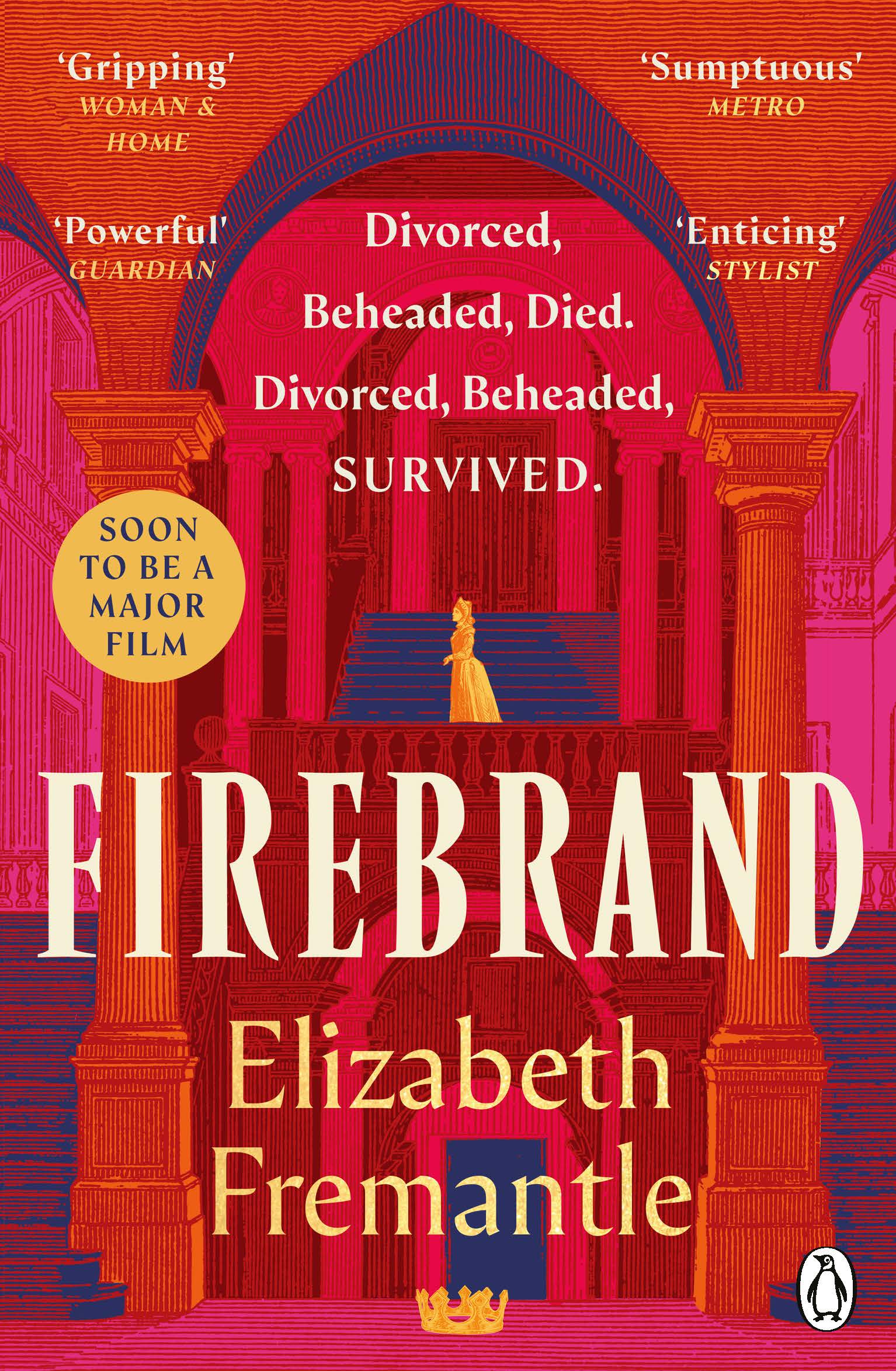
I’m particularly fond of Dot Fownten, Katherine Parr’s maid, an almost entirely fictional character in Queen’s Gambit/Firebrand. I created her initially as a cypher to help describe the Tudor court through the eyes of someone who had never seen it, but she took on a life of her own and became a pivotal character. I have even considered writing a novel just about her.

As a historical writer, if you could stand witness to a historical event or walk through a specific time/scene/building or have a frank discussion with one historical figure, which would you choose and why?
I would like to be a fly on the wall as Artemisia Gentileschi paints her masterpiece, Judith Slaying Holofernes. It is a work so alarming and visceral, to see it spring to life would be extraordinary.
What three books do you feel are necessary for any book collection to feel complete? What additional one would you add for an author’s library?
The Complete Works of William Shakespeare – for obvious reasons; Hilary Mantel’s Wolf Hall Trilogy – Mantel’s prose styling is second to none, and Patricia Highsmith’s The Talented Mr Ripley – she may not write beautiful prose but how Highsmith achieves the impossible, making the reader root for the psychopathic Thomas Ripley is literary alchemy. My author’s library addition would be Ovid’s Metamorphoses – these stories have found their way into so much of our literature and are always an inspiration to me, informing almost everything I write.
What can you share about what you are writing now? Or an upcoming release?
After Disobedient I wanted to write another Italian novel as a companion piece. Sinners is set in Rome in 1599. It is about Beatrice Cenci, a woman convicted for plotting to murder her father. It is probably the darkest and most shocking of my novels and will be published in 2025.
What was the last great book that you read?
Alice Winn’s In Memoriam. I’ve just finished it and am bereft.
Online tickets for the conference are available:
https://historicalnovelsocietyuk.regfox.com/online
Rebekah Simmers is a member of the HNS UK 2024 conference organisation team. Find out about her novel, The King’s Sword, on her website.
 The Historical Novel Society UK 2024 conference
Leave a comment