Rebekah Simmers has been interviewing writers who are presenting at the HNS 2024 UK Conference
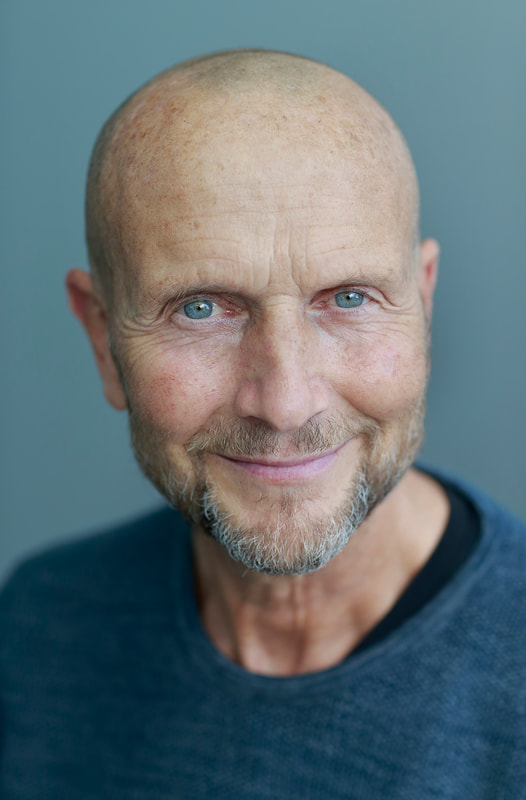

RS: We are so thrilled that you will be joining us for the HNS 2024 UK Conference! What are you looking forward to about the conference? Can you share a teaser for your presentation?
CH: I’m thrilled to be back. The last UK one I attended was Oxford in 2016 which was brilliant. I was also GoH at HNS North America in Denver in 2015 which was fun. The presentation? Diana (Gabaldon) and I are going to talk about adapting one’s work into a different medium. Since I’ve done so little and she’s done so much – my basic plan is to interview her!

Chris Humphreys is presenting with Diana Gabaldon at the HNS 2024 UK Conference, on the topic “Adaptation: Should a Novelist Even Attempt to Adapt Their Work Into Another Medium … or Leave it to the Pros?”
You’ve hit all the points when it comes to our conference theme – screen, stage, and writing. I saw on your website that you come from a family of actors – sounds inspirational! Can you share a bit of your journey with us to acting and writing?
I always feel I was doomed: four grandparents and my dad, all actors. I love acting and hit some hi-spots. Really, I became an actor so I could leap around with bladed weaponry which I have done a lot, happily. But you have to wait for people to give you permission to act by employing you and I got frustrated. I’ve always been a storyteller and wanted to tell my own. Hence the move first into plays, then novels. I’ve been so blessed to (mostly) make a life’s living from storytelling in those different forms.
With being both an actor and a writer, how has that affected your writing process? Do you tend to “see your scenes playing out” as you create them? How do you think it affects your character creation?
I do write as if a film is appearing before me. Very visual, and sensual. I base it all in character – what they want, what stops them getting it, how they triumph or fail, how they react. Plus I love to move the action and character forward in dialogue. So, yes, acting affects it all.
HNS has launched the First Chapters Competition with the conference. What is a novel you’ve read over your life that unexpectedly grabbed you from the opening lines and whose words stayed with you? Do you believe those first lines carry the same weight when it comes to the stage and screen?
I do think opening lines are super important. The first hook for a reader. I labour over mine! Which one? Wow, there are so many that hooked me immediately. The one that springs to mind is not hist-fic. I love Tom Robbins and his first sentences always make me laugh, which is never a bad thing.
Looking back on your own writing career, what would you say was the most influential writing advice you received from another author? How have you made that work for you?
It is a cliche but someone once said to me: Just write it. Don’t try to make it right. That’s how I work: come up with an idea and dive in. Don’t consider whether it’s ‘good’ or ‘bad’. Just keep going until you have a first draft. Once you have that, anything is possible.
What do you think it takes to have longevity across a writing career? Sanity? Fun? What’s an unexpected joy that came into your life from such a successful career?
The urge to just keep sharing stories. You realize that no one else has had this take on the world exactly as you do. So it almost becomes your duty to share it. Then to remember that it is called a ‘play’ for a reason. Play! Marvel at how your mind just keeps coming up with connections and then get them down to share. The ‘unexpected joy’? I suppose that wonder that people take your work and make their own story from it. It takes a writer and a reader to make a story. Novels are a team game!
Where do you typically begin your research? Do you have a go-to resource? Has there been anything that you’ve researched for your writing over the years that made a huge impact on you or a novel or series that you were writing? That changed how you write or what you write? How do you organize your story details across your series? (Character details, scene research, story lines, etc.)
Wow, those questions are huge, and warrant a separate essay if not a whole book! I love research because I am so curious about the world, past and present. But though getting the details right is important, the best thing about research is that an interesting fact acts as a ‘springboard for the imagination’. It sends you off into all sorts of fascinating directions when you realize that your characters can, and need to, take this fact and shape their lives with it – which of course shapes your novel too! That happens scores of times, every single book!
Is there a specific scene that you’ve written over the years that you feel especially connected to? If not a specific scene, a secondary story line that was a favorite to write?
There are a few scenes I’ve written that can still make me tear up. When I’ve killed a character or… well, in my novel about the fall of Constantinople, A Place Called Armageddon, I write from the point of view of an unnamed, universal citizen who will give his life for the city he loves. I read it again and realize that it was one of those (few) times when I completely turned emotion into words. Channelled it. That gets to me!
As a historical writer, if you could stand witness to a historical event or walk through a specific time / scene / building or have a frank discussion with one historical figure, which would you choose and why?
Where and when I would set the time machine’s dial for? That’s easy. That day, probably early in 1601 when the Lord Chamberlain’s Men are about to do a play about a Danish Prince for the very first time. And if I could grab Will Shakespeare for a pint in a Southwark tavern afterwards I’d be a very happy man.

What three books do you feel are necessary for any book collection to feel complete? What additional one would you add for an author’s library?
Hmm. Well, that’s so personal. For me, I’d have to have Shakespeare’s Complete Works. Probably Joseph Campbell’s Reflections on the Art of Living. And The Three Musketeers. Additional: Warrior Scarlet by Rosemary Sutcliff.
What can you share about what you are writing now? Or an upcoming release?
I’m writing two books at different stages right now. I am writing a follow up (but not a sequel) to my WW2 romance spy war novel ‘Someday I’ll Find You’. Working title ‘Eve Sinclair’. I crashed out a first draft – 102,000 words in just under seven weeks, which is going some, even for me – I hope it’s a good sign! And, 16 years after the last one, I have finally written a new Jack Absolute novel. It is appropriately called: The Resurrection of Jack Absolute and I couldn’t be happier to be back in Absolute World. Now I just need to find a publisher to reissue the whole series!
What was the last great book that you read?
Birds Without Feathers by Louis de Bernieres. Genius!
Online tickets for the conference are available:
https://historicalnovelsocietyuk.regfox.com/online
Rebekah Simmers is a member of the HNS UK 2024 conference organisation team. Find out about her novel, The King’s Sword, on her website.
 The Historical Novel Society UK 2024 conference
Leave a reply to Historical Novel Society 2024 UK Conference: Conference Interviews – Rebekah Simmers Cancel reply