
Rebekah Simmers has been interviewing writers who are presenting at the HNS 2024 UK Conference
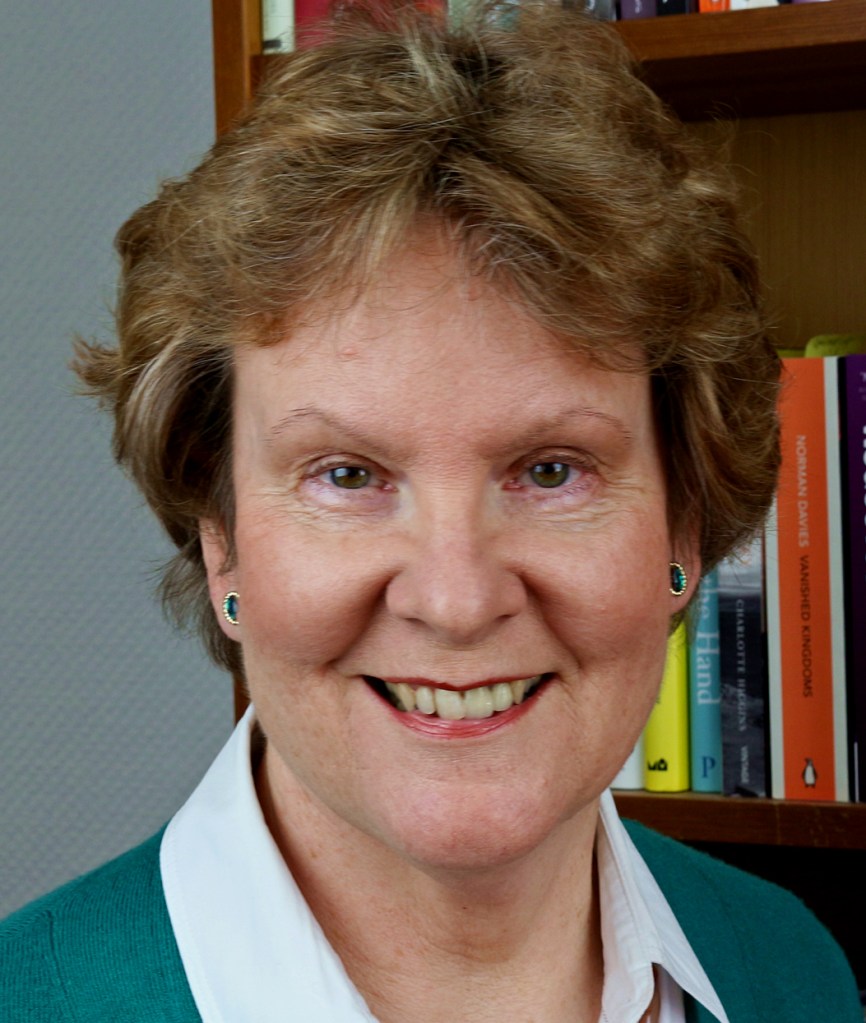
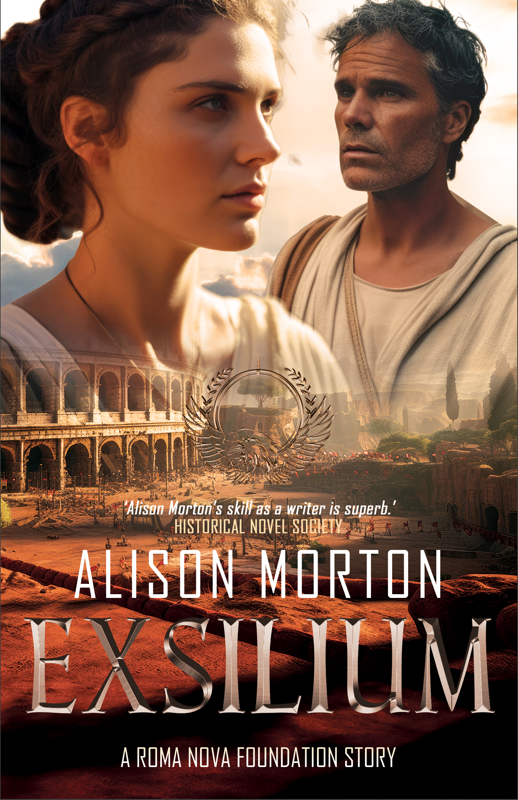
RS: We are so thrilled that you will be joining us for the HNS 2024 UK Conference! What are you looking forward to about the conference? Can you share a teaser for your presentation?
AM: As a history nerd, I’m looking forward to seeing and talking to my fellow historical authors. Although I’ve been writing novels for over fourteen years, I still find I learn something new each conference. The teaser – what do the Romans mean to us?
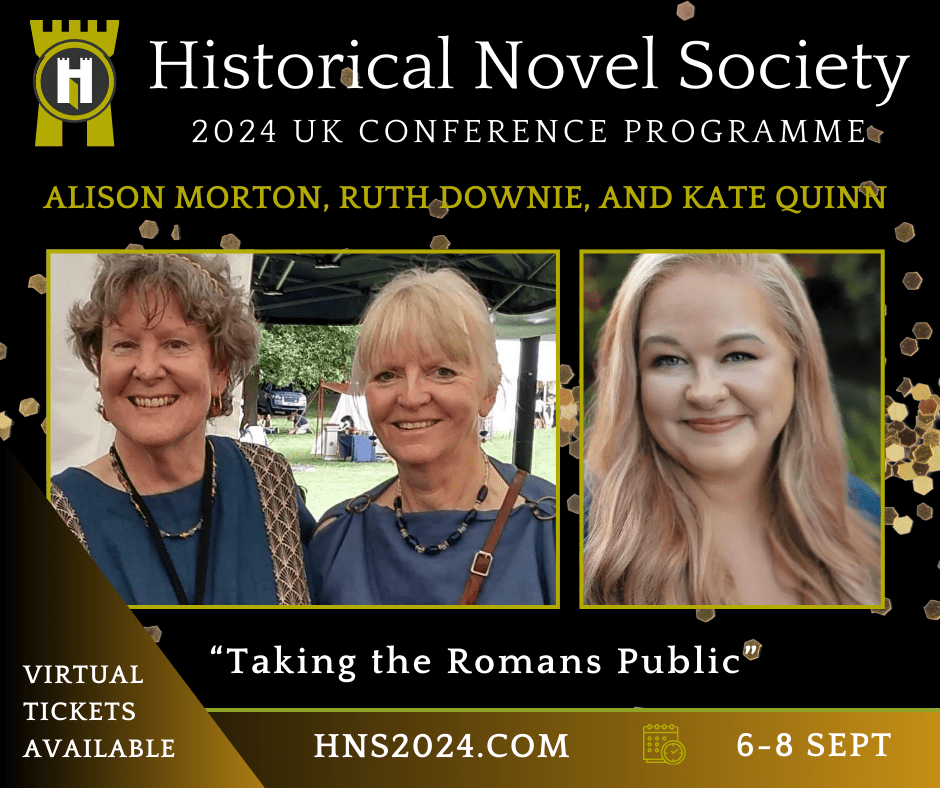
Alison Morton is presenting on “Taking the Romans Public” at the HNS 2024 UK Conference, along with Ruth Downie and Kate Quinn
HNS has launched the First Chapters Competition with the conference. What is a novel you’ve read over your life that unexpectedly grabbed you from the opening lines and whose words stayed with you?
The Eagle of the Ninth was the first Roman historical fiction I read as a child. The opening chapter stays with me even now. Centurion Marcus Flavius Aquila marches along the Fosse Way towards Isca Dumnoniorum in his quest to discover what happened to the Ninth Hispania legion, his father’s fate and the lost eagle.
Looking back on your own writing career, what would you say was the most influential writing advice you received from another author?
Ever since I went to my first writing conference as a scared newbie, I’ve received little else but kindness and encouragement. I knew about research – I had completed an MA in History in 2009 – and I knew I could string sentences together grammatically, but novel writing was a new craft. Adrian Magson, the crime and thriller writer, gave me some excellent advice – keep the pace going.
Of the wide cast of characters in your novels, who has been your most surprisingly challenging character to write? What strategies do you use for these types of characters?
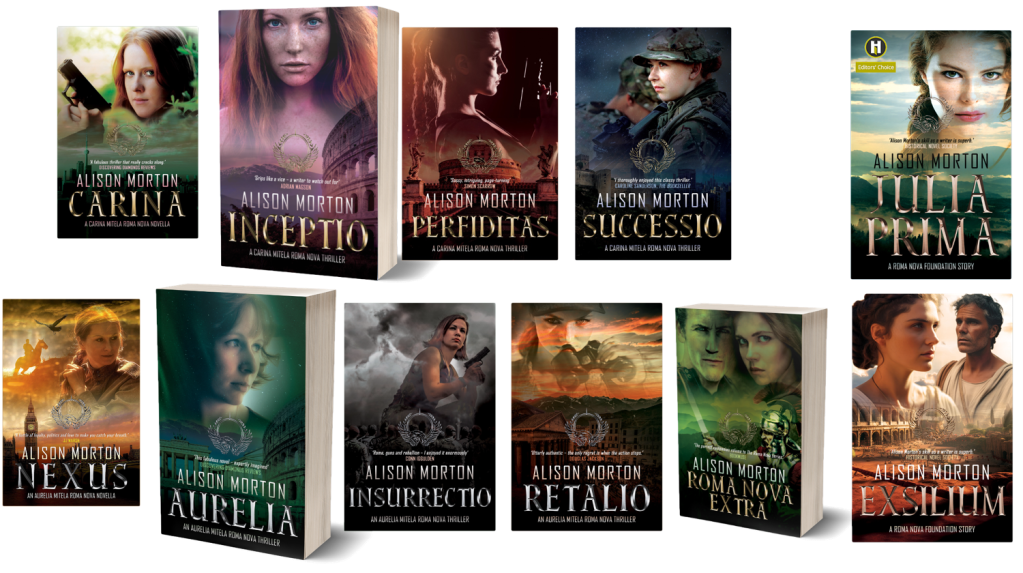
Haha! My characters are all awkward because they’re human. I put myself in their head, in their mentality and try to look through their eyes, even when I’m not writing in first person. Sometimes, being in their mind is not pleasant, such as Nicola in SUCCESSIO or Caius Tellus in AURELIA, INSURRECTIO and RETALIO but I make myself dig deep into the characters’ psyche as no reader wants to spend time with cardboard cut-outs.
What do you think it takes to have longevity across a writing career? Sanity? Fun? What’s an unexpected joy that came into your life from such a successful career?
Longevity is firmly based on persistence! Alternative Roman history is not an easy genre but I’m delighted the HNS includes it. Also on curiosity… What happened next to my characters (sequels)? What are their buried secrets? (prequels and interspersed novellas)? How was their country of Roma Nova founded (deep dive prequels into the 4th century). The joys? When readers tell you they love your world, your characters, their achievements and their joys.
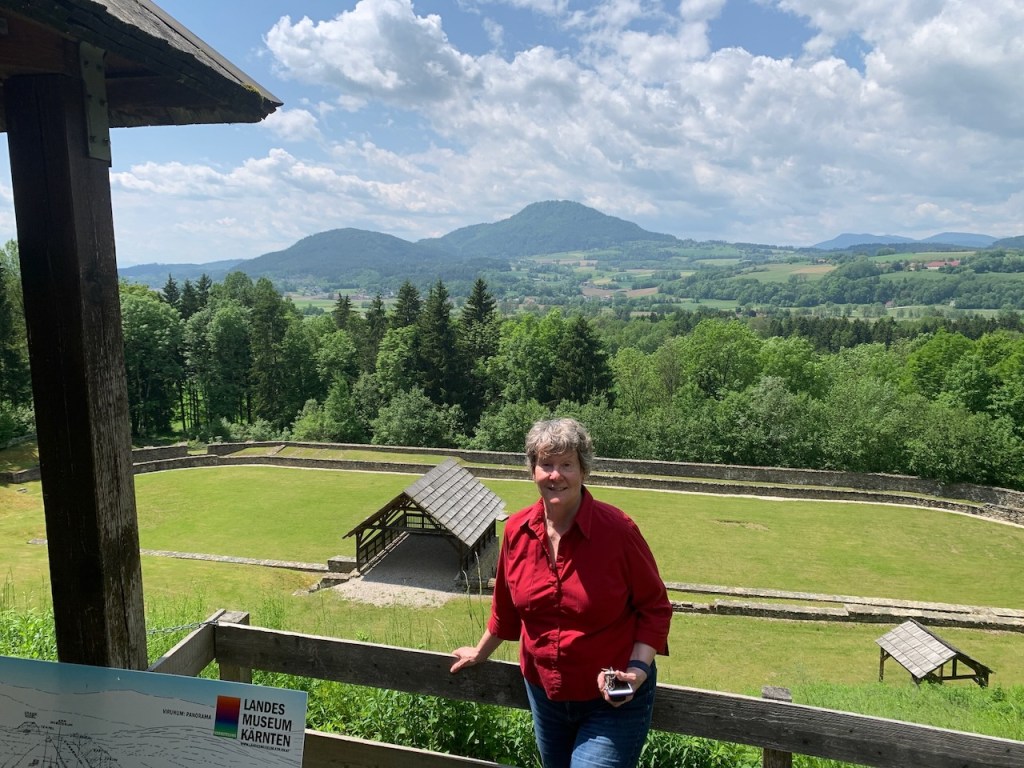
Where do you typically begin your research? Has there been anything that you’ve researched for your writing over the years that made a huge impact on you or a novel or series that you were writing? That changed how you write or what you write?
I’ve been fascinated by Ancient Rome since I walked on my first mosaic at age eleven and have a reasonable understanding of that civilisation. I’ll read and listen to anything about Rome! For the last two books set at the end of the 4th century, I’ve mined the usual resources, such as Lionel Casson’s Travel in the Ancient World (thank you, Ruth Downie, for the recommendation!), but the great treasure has been Noricum by Géza Alföldy (trans. Anthony Birley). I’d also like to cite Christendom: The Triumph of a Religion, AD 300-1300 by Peter Heather and The Darkening Age: The Christian Destruction of the Classical World by Catherine Nixey.
How do you organize your story details across your series? (character details, scene research, story lines, etc.)
Spreadsheets! I keep track of character ages and members of the Twelve Families on the wonderful Excel. I don’t outline, but I’ve invented a grid which logs all the key events and decisions in each chapter and when they occurred which I fill in as I go. This way, I can track the narrative and character development and hopefully head off any trouble, such as a saggy middle.
Is there a specific scene that you’ve written over the years that you feel especially connected to? If not a specific scene, a secondary story line that was a favourite to write?
I do like to give my secondary characters some limelight. Lurio, whom we meet in INCEPTIO, is a constant irritant in Carina’s life through four books, but also a staunch friend. A secret – he’s actually based on a senior officer in my former regiment and I always smile when writing him!
As a historical writer, if you could stand witness to a historical event or walk through a specific time / scene / building or have a frank discussion with one historical figure, which would you choose and why?
I’d like to sit down with Late Antiquity Empress Galla Placidia. She was born at the end of the 4th century, daughter of Theodosius I, mother, tutor, and advisor to Valentinian III, queen consort to Ataulf, king of the Visigoths for nearly two years, consequently briefly (and reluctantly) empress consort to Constantius III. Moreover, she managed the government administration of the Western Roman Empire as regent during the early reign of her son Valentinian III and exerted influence at court until her death in 450. What stories such a remarkable woman would tell!
What can you share about what you are writing now? Or an upcoming release?
With JULIA PRIMA and EXSILIUM I’ve been writing
the 4th century for the best of three years, so I’m taking a break
from Rome and writing the third of my contemporary thrillers featuring a Franco/British special forces officer. She has much of the same grit as my Roman and Roma Nova heroines!
What was the last great book that you read?
Amanda Craig’s The Three Graces was clever, poignant and entertaining and in non-fiction, Peter Heather’s Christendom: The Triumph of a Religion, AD 300-1300 was fascinating as well as informative.
Online tickets for the conference are available:
https://historicalnovelsocietyuk.regfox.com/online
Rebekah Simmers is a member of the HNS UK 2024 conference organisation team. Find out about her novel, The King’s Sword, on her website.

 The Historical Novel Society UK 2024 conference
Leave a reply to Historical Novel Society 2024 UK Conference: Conference Interviews – Rebekah Simmers Cancel reply